


The Fundamental Operating Principle
At the heart of every pellet stove, biomass boiler, and industrial solid-fuel furnace lies a critical enabling technology that transforms electrical energy into the intense thermal pulse required to initiate combustion. This technology is the Ceramic Pellet Igniter, a hot-surface ignition device that leverages the principles of electrical resistance heating to achieve temperatures sufficient to ignite wood pellets, wood chips, coal briquettes, and various forms of biomass within seconds.
The operating mechanism of a Ceramic Pellet Igniter is elegantly straightforward yet technologically sophisticated. When an electric current passes through the ceramic heating element—typically composed of silicon carbide, silicon nitride, or high-purity alumina—the material's inherent electrical resistance generates intense thermal energy through Joule heating. This heat rapidly elevates the element's surface temperature to levels exceeding 800°C, with some advanced formulations reaching 1000°C or higher within 30 to 60 seconds.
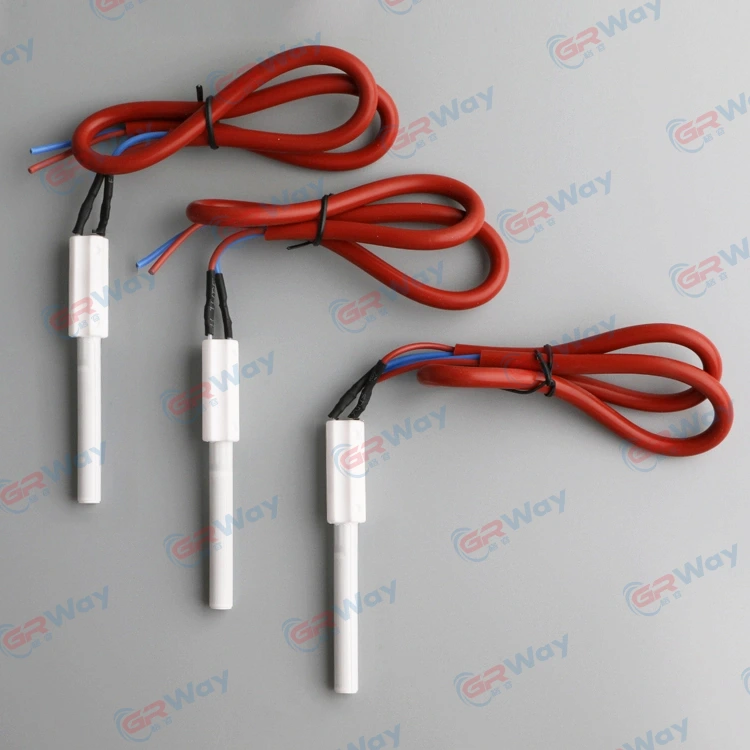
What distinguishes the Ceramic Pellet Igniter from conventional metal-sheathed ignition elements is its unique cylindrical or tubular geometry. This design allows combustion air to flow both through the interior and around the exterior of the heating element simultaneously. The dual-path airflow maximizes heat transfer efficiency, as the incoming air is heated from both internal and external surfaces before being directed onto the fuel bed. This architectural feature enables the igniter to achieve rapid ignition with minimal energy expenditure—typically consuming only about one-tenth of the energy required by traditional hot-air fans or ignition blowers.
The ignition sequence follows a carefully orchestrated progression. Upon energization, the Ceramic Pellet Igniter reaches its operating temperature within a controlled time window that aligns with the combustion controller's timing parameters. The heated element then raises the temperature of the surrounding air stream, which is directed onto the fuel pellets. As the superheated air contacts the biomass fuel, it rapidly drives off volatile compounds and raises the fuel surface temperature to the point of auto-ignition. Once combustion is established and sustained by the burner's primary flame, the igniter is typically de-energized, remaining idle until the next start-up cycle.
This intermittent operation mode represents a significant advancement over permanent pilot-flame systems, contributing to substantial energy savings across the equipment's operational lifetime. The ceramic construction further ensures that the Ceramic Pellet Igniter can withstand the extreme thermal cycling inherent in intermittent ignition duty without degradation—a capability that metal-sheathed alternatives struggle to match.
Material Science: Alumina vs. Silicon Nitride
The performance characteristics of a Ceramic Pellet Igniter are fundamentally determined by the ceramic material from which it is fabricated. Two primary material families dominate the market: alumina (aluminum oxide, Al₂O₃) and silicon nitride (Si₃N₄). Each offers distinct advantages and trade-offs that make it suitable for different application environments.
Alumina-Based Ceramic Pellet Igniters
Alumina ceramic igniters represent the established workhorse of the industry, offering a compelling balance of performance, reliability, and cost-effectiveness. High-purity alumina (typically 92% to 96% Al₂O₃) serves as the base material, with an integrated tungsten conductor embedded within the ceramic matrix. This construction enables the igniter to reach permanent operating temperatures between 800°C and 1100°C.
The key advantages of alumina-based Ceramic Pellet Igniter devices include excellent electrical insulation properties, strong oxidation resistance, and mature, well-established manufacturing processes that enable consistent quality at scale. These igniters demonstrate stable performance across a wide range of standard industrial and residential pellet furnace applications. Their cost-effectiveness makes them particularly attractive for high-volume production environments where cost is a key consideration.
However, alumina does present certain limitations. While it offers high strength, its fracture toughness is relatively moderate compared to advanced ceramic alternatives. This means that alumina igniters may be more susceptible to mechanical damage from physical impacts or extreme thermal shock events.
Silicon Nitride Ceramic Pellet Igniters
Silicon nitride (Si₃N₄) represents the next generation of ceramic ignition technology, engineered for demanding applications that push the boundaries of temperature, thermal cycling, and service life. Silicon nitride igniters can achieve peak operating temperatures up to 1200°C to 1400°C, significantly exceeding the capability of alumina-based alternatives.
The superior performance of silicon nitride stems from its exceptional material properties. It offers higher thermal conductivity, enabling faster thermal response and more rapid temperature rise. Its fracture toughness is substantially higher than alumina, providing superior resistance to mechanical stress and thermal shock. Under extreme high-temperature, frequent start-stop, and high-cycle operating conditions, silicon nitride igniters demonstrate significantly extended service life. Some manufacturers report that silicon nitride components can achieve ten times the operational lifespan of conventional alumina ceramics in demanding cyclic duty.
The trade-off for this enhanced performance is higher material cost and more complex processing requirements. Silicon nitride igniters are therefore best suited for premium heating equipment, high-end industrial applications, and scenarios where maximum reliability and longevity justify the additional investment.
Comparative Material Performance
The following table summarizes the key performance differences between alumina and silicon nitride Ceramic Pellet Igniter variants:
| Performance Parameter | Alumina (Al₂O₃) | Silicon Nitride (Si₃N₄) |
|---|---|---|
| Maximum Operating Temperature | ~1000°C | 1200–1400°C |
| Heating Speed | Meets general requirements | Faster thermal response |
| Fracture Toughness | Moderate | Superior |
| Thermal Shock Resistance | Moderate | Excellent |
| Service Life (High-Cycle Duty) | Good | Significantly extended |
| Electrical Insulation | Excellent | Good |
| Relative Cost | Lower | Higher |
Critical Performance Specifications
Understanding the technical specifications of a Ceramic Pellet Igniter is essential for proper selection, integration, and troubleshooting. The following parameters define the operational envelope and capabilities of these critical components.
Electrical Parameters
The Ceramic Pellet Igniter is typically designed for standard AC voltages, with 120V and 230V/240V being the most common variants. Power ratings vary by application and geometry, ranging from approximately 100W for compact residential units to 300W or higher for industrial and commercial installations. Resistance values typically fall within the range of 30 to 50 ohms, though specific designs may deviate from this range.
It is critically important to match the igniter's voltage and power specifications to the control system's output. Excess voltage can trigger localized overheating and accelerate component aging. Conversely, insufficient voltage may prevent the igniter from reaching the temperature required for reliable ignition, leading to start-up failures and incomplete combustion.
Thermal Performance
The defining thermal characteristic of any Ceramic Pellet Igniter is its ability to reach ignition temperature rapidly and reliably. Premium igniters achieve 500°C within 30 seconds and 800°C within 60 seconds. The maximum temperature capability varies by material, with silicon carbide and silicon nitride variants capable of reaching 1500°C under certain conditions.
The temperature uniformity across the heating element is equally important. Advanced manufacturing processes ensure that the hot zone maintains a consistent temperature profile over repeated heating cycles, preventing localized hot spots that could lead to premature failure.
Mechanical and Dimensional Specifications
Ceramic Pellet Igniter devices are available in a range of geometries to suit different equipment designs. Standard cylindrical heaters typically measure 94mm to 130mm in length with an 18mm diameter. Slim-profile designs are also available for compact burner heads and condensing boilers with limited installation space.
The ceramic element is typically housed in a temperature-resistant ceramic base and secured by clamping springs that provide both mechanical retention and electrical contact. This modular construction enables easy field replacement when necessary, minimizing equipment downtime.
Application Ecosystem Across Heating Platforms
The versatility of the Ceramic Pellet Igniter has made it the ignition technology of choice across a broad spectrum of heating equipment. Its ability to reliably ignite diverse fuel types under varying operating conditions has driven widespread adoption in both residential and industrial sectors.
Residential Pellet Stoves and Boilers
In the residential heating market, Ceramic Pellet Igniter technology has become virtually ubiquitous in modern pellet stoves and pellet boilers. These appliances rely on the igniter to automatically start the combustion process at the beginning of each heating cycle, eliminating the need for manual lighting and enabling programmable, thermostat-controlled operation.
The igniter's rapid heating capability—typically achieving ignition within 60 to 90 seconds—aligns perfectly with the control sequences of modern pellet feed systems and combustion air fans. This synchronization ensures that fuel is delivered and airflow is established precisely when the igniter reaches operating temperature, optimizing start-up efficiency and minimizing unburned fuel emissions during the critical first seconds of ignition.
Biomass Boilers and Industrial Furnaces
Commercial and industrial biomass heating systems present more demanding ignition requirements than residential equipment. These systems typically operate at higher capacities, with larger fuel volumes and more stringent emissions standards. The Ceramic Pellet Igniter meets these challenges through its ability to deliver concentrated, intense heat precisely where needed.
Beyond standard wood pellets, ceramic igniters are capable of igniting a wide range of biomass fuels including wood chips, split logs, straw, coal briquettes, corn, and other agricultural residues. This fuel flexibility makes the technology particularly valuable in regions where biomass feedstock availability varies seasonally or where operators seek to diversify their fuel supply.
Specialized and Niche Applications
The adaptability of Ceramic Pellet Igniter technology extends beyond conventional heating applications. These components find use in kerosene fan heaters, small-scale industrial furnace ignition systems, incense burners, and various niche heating devices. In the automotive, medical, and semiconductor industries, similar ceramic heating elements serve as innovative heating solutions in specialized equipment.
The key characteristics that enable this versatility—rapid heating, high-temperature capability, chemical resistance, and electrical insulation—make the Ceramic Pellet Igniter a foundational technology that continues to find new applications as heating system designs evolve.
Durability, Thermal Shock Resistance, and Service Life
One of the most compelling advantages of the Ceramic Pellet Igniter over traditional ignition technologies is its exceptional durability and resistance to the harsh operating conditions inherent in solid-fuel combustion equipment.
Thermal Shock Resistance
Thermal shock—the stress induced by rapid temperature changes—represents one of the primary failure mechanisms for ignition components. A Ceramic Pellet Igniter may experience temperature swings from ambient to 1000°C and back within minutes, repeated thousands of times over its service life. Advanced ceramic materials are engineered specifically to withstand this punishing duty cycle.
Silicon nitride igniters demonstrate exceptional thermal shock resistance, with some formulations capable of withstanding temperature differentials of 800°C or more without failure. Even alumina-based igniters, while more moderate in their thermal shock tolerance, significantly outperform metal-sheathed alternatives that are prone to fatigue cracking and oxidation under cyclic thermal loading.
Oxidation and Corrosion Resistance
The combustion environment within a pellet stove or biomass boiler is highly corrosive, containing moisture, volatile organic compounds, and various combustion byproducts that can attack ignition components. The Ceramic Pellet Igniter addresses this challenge through its inherent chemical stability. The ceramic materials used in these igniters are electrically oxidation-resistant and corrosion-resistant, maintaining their structural integrity and electrical properties even after prolonged exposure to aggressive combustion atmospheres.
The manufacturing process further enhances this durability. In high-quality igniters, the conducting path is completely embedded within the ceramic matrix, protecting the electrical circuit from corrosive attack. This construction ensures that the igniter remains electrically isolated from its surroundings and that the electrical contacts remain protected by the ceramic housing.
Quantified Service Life
Modern Ceramic Pellet Igniter devices demonstrate remarkable longevity when properly matched to their application. Premium igniters are tested to more than 100,000 heating cycles, with some designs achieving up to 100,000 cycles under real-world operating conditions. In terms of calendar time, a typical residential igniter may last 3 to 5 years under normal use, while industrial-grade silicon nitride igniters can significantly exceed this timeframe.
The extended service life of ceramic igniters compared to conventional metal coil igniters—typically 5 to 10 times longer—translates into reduced maintenance frequency, lower replacement part costs, and improved overall system reliability.
Common Failure Modes and Diagnostic Approaches
While the Ceramic Pellet Igniter is exceptionally reliable, understanding potential failure modes enables effective troubleshooting and preventive maintenance. Most failures are not due to product defects but rather result from specific operating conditions or system interactions.
Voltage and Power Mismatch
One of the most common causes of premature igniter failure is voltage mismatch. When the applied voltage exceeds the igniter's design specification, localized overheating occurs, accelerating material aging and leading to premature failure. Conversely, undervoltage conditions may prevent the igniter from reaching ignition temperature, causing repeated start-up attempts that stress both the igniter and the control system.
Diagnosis of voltage-related issues requires measuring the voltage at the igniter terminals during the ignition cycle. Any significant deviation from the rated voltage should be investigated and corrected.
Physical Damage and Contamination
The ceramic element of a Ceramic Pellet Igniter is robust but not indestructible. Physical impacts during installation or maintenance can cause cracking or chipping that compromises performance. Additionally, carbon deposition or ash accumulation on the element surface can insulate the heater, reducing heat transfer efficiency and potentially causing localized overheating.
Visual inspection should be part of regular maintenance. Signs of cracking, discoloration, or surface contamination warrant further investigation or replacement.
Thermal Cycling Fatigue
Even with excellent thermal shock resistance, the Ceramic Pellet Igniter will eventually reach the end of its useful life after many thousands of heating cycles. The failure mode typically manifests as increased resistance, reduced heating rate, or complete open circuit. Monitoring ignition time and temperature rise rate can provide early warning of degradation.
When a Ceramic Pellet Igniter reaches the end of its service life, replacement is straightforward due to the modular design. The igniter is interchangeably inserted in its ceramic base, secured by clamping springs, and electrically contacted through simple connections. This design enables rapid field replacement without specialized tools or extensive training.
Installation Best Practices and Operational Guidelines
Maximizing the service life and performance of a Ceramic Pellet Igniter requires attention to installation practices and operational parameters. The following guidelines represent industry best practices derived from decades of field experience.
Proper Electrical Connection
Secure, low-resistance electrical connections are essential for reliable igniter operation. Loose connections can cause arcing, voltage drops, and localized heating that damages both the igniter and the connecting wires. All electrical connections should be tightened to the manufacturer's specified torque values and inspected periodically for signs of overheating or corrosion.
Airflow Optimization
The unique through-hole geometry of the Ceramic Pellet Igniter relies on proper airflow for optimal heat transfer. Obstructions in the air path—whether from ash accumulation, misaligned components, or improper installation—can significantly degrade ignition performance. Regular inspection and cleaning of the igniter and its surrounding air passages should be part of routine maintenance.
The following checklist summarizes key installation and maintenance practices:
- Verify voltage compatibility between the igniter and control system before installation
- Ensure electrical connections are clean, tight, and corrosion-free
- Confirm unobstructed airflow through and around the igniter element
- Inspect the ceramic element for cracks or damage before installation
- Replace the igniter at the first sign of degraded performance
- Document replacement dates to establish maintenance intervals
Control System Integration
Modern heating equipment incorporates sophisticated control logic that manages the ignition sequence. The control system must be properly configured to provide the correct voltage and duration of power to the Ceramic Pellet Igniter. Parameters such as pre-purge time, ignition trial duration, and post-ignition stabilization periods must be set according to the equipment manufacturer's specifications.
Intermittent ignition systems, which energize the igniter only during start-up and re-ignition sequences, represent the optimal operational mode for maximizing igniter life and minimizing energy consumption. Continuous energization should be avoided except in specialized applications where it is specifically required by the equipment design.
Frequently Asked Questions
A high-quality Ceramic Pellet Igniter typically lasts 3 to 5 years under normal residential use. In terms of cycles, premium igniters are tested to more than 100,000 heating cycles. Silicon nitride variants can significantly exceed these figures in demanding applications.
Yes. The Ceramic Pellet Igniter is capable of igniting wood chips, split logs, coal briquettes, straw, corn, and various other biomass fuels. Its versatility makes it suitable for diverse heating applications beyond standard pellet stoves.
Ceramic igniters offer 5 to 10 times longer service life than conventional metal coil igniters. They provide faster ignition response, superior performance in wet fuel conditions, and better resistance to oxidation and corrosion. The ceramic construction also enables higher operating temperatures and better thermal shock resistance.
The most common causes of premature failure are voltage mismatch (overvoltage or undervoltage), physical damage during installation or maintenance, carbon deposition or ash accumulation on the element surface, and normal end-of-life after many thousands of heating cycles.
No. The Ceramic Pellet Igniter is designed for easy field replacement. It is interchangeably inserted in a temperature-resistant ceramic base, secured by clamping springs, and electrically contacted through simple connections. Replacement typically requires no specialized tools and can be completed in minutes.
Ready to Optimize Your Ignition System?
For over a decade, GREENWAY has been at the forefront of ceramic heating element manufacturing, delivering reliable, high-performance ignition solutions for biomass heating systems worldwide. Our engineering team brings deep expertise in ceramic materials science and ignition system design, ensuring that every Ceramic Pellet Igniter meets the most demanding performance and durability standards.
Whether you are specifying components for a new product line, seeking to upgrade existing equipment, or troubleshooting ignition challenges in the field, our team is ready to assist with technical guidance and application support.
Contact us today to discuss your ignition requirements