


Why Upgrade to a Ceramic Pellet Igniter for Faster, More Reliable Starts?
If your pellet stove, pellet boiler, or biomass burner sometimes “tries” to light but fails, you’re not alone—and it’s rarely just bad pellets. Most ignition headaches come down to one small part that takes the biggest beating: the igniter. A Ceramic Pellet Igniter is often the simplest way to reduce misfires, shorten cold-start time, and stop cycling through replacements that burn out too soon. This guide breaks down what actually causes ignition problems, how a Ceramic Pellet Igniter works, and how to choose the right spec so you don’t waste money on a mismatch.
Article Abstract
Ignition failures cost time, fuel, and patience—especially when a heater starts reliably one week and refuses the next. This article explains the most common customer pain points behind pellet ignition problems, then shows how a Ceramic Pellet Igniter addresses them with hot-surface heating, high temperature tolerance, and practical installation flexibility. You’ll get a compatibility checklist (voltage, power, dimensions, mounting, wiring), a troubleshooting table you can use on-site, and a maintenance routine that helps your igniter last longer. If you’re sourcing for production or replacement, you’ll also find a simple evaluation plan that reduces returns and “it doesn’t fit” complaints.
Table of Contents
- Outline
- What Customers Usually Struggle With
- What a Ceramic Pellet Igniter Is
- Why Ceramic Often Outperforms Traditional Hot Rods
- How to Choose the Right Ceramic Pellet Igniter
- Installation Tips That Prevent Early Failure
- Troubleshooting Table for Faster Diagnosis
- Maintenance That Extends Service Life
- Notes for OEMs and Bulk Buyers
- FAQ
- Conclusion and Next Step
Outline
- Map the real-world reasons pellet ignition fails (not just “bad parts”).
- Explain how a Ceramic Pellet Igniter produces consistent ignition heat.
- Compare ceramic vs. traditional options using buyer-friendly criteria.
- Give a step-by-step compatibility checklist to avoid wrong orders.
- Provide an installer-focused routine that reduces warranty claims.
- Share a quick troubleshooting table and a practical maintenance schedule.
- Answer common sourcing and performance questions in an FAQ.
What Customers Usually Struggle With
When customers say “my stove won’t light,” they often mean one of these scenarios:
- Slow starts that feel random: It lights sometimes, then fails on the next cold start.
- Igniter burnouts: The part works for a season (or less) and then opens up or loses heating power.
- Overfeeding and smoky starts: Pellets drop in, smolder, and create smoke before ignition catches.
- “It doesn’t fit” replacements: Same “type” of igniter, wrong diameter/length/mounting, or the wires can’t route safely.
- Energy waste and nuisance trips: Long ignition cycles draw power and may trip safety limits.
- Inconsistent airflow at the burn pot: Ash buildup or weak draft prevents ignition heat from doing its job.
The key takeaway: ignition reliability is a system problem, but the igniter is the “spark” (even though it isn’t a spark plug). Upgrading to a Ceramic Pellet Igniter won’t fix blocked vents or wet fuel—but it can give your system a much stronger, faster heat source so normal variability doesn’t turn into a no-start.
What a Ceramic Pellet Igniter Is
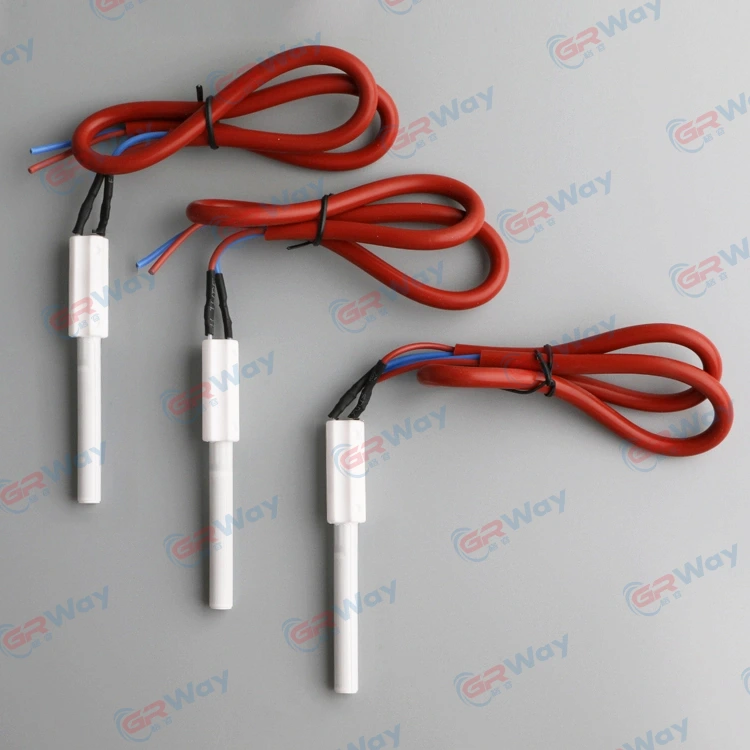
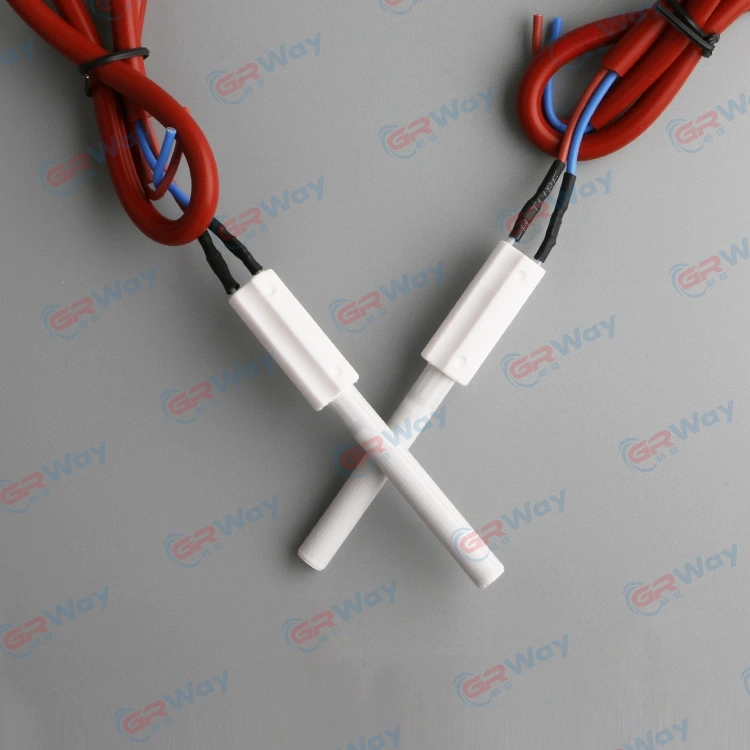
A Ceramic Pellet Igniter is a hot-surface heating element designed to bring the ignition zone up to temperature quickly—usually by heating a ceramic body that transfers heat to the air and pellets near the burn pot. In many pellet appliances, the igniter sits in a tube or holder so hot air can move around it and into the fuel bed.
What makes it “ceramic” in practice?
The heating structure is built into or onto a ceramic substrate (commonly alumina-based), which is electrically insulating, heat resistant, and stable at high temperatures.
That stability matters because ignition is a harsh cycle: heat up fast, cool down, repeat—plus ash, airflow turbulence, and sometimes moisture from startup conditions.
Depending on model and power rating, ceramic igniters can reach ignition-relevant surface temperatures rapidly. This is why many users notice the biggest improvement in cold starts, where the appliance used to “struggle” before.
Why Ceramic Often Outperforms Traditional Hot Rods
Traditional metal-sheathed hot rods can work well, but they’re often more sensitive to thermal shock and long ignition cycles. Ceramic designs are popular because they aim to deliver high surface temperature fast, with materials engineered for repeated heat cycling.
Here’s a buyer-friendly comparison that focuses on outcomes customers care about:
| Decision Factor | Ceramic Pellet Igniter | Traditional Hot Rod (Metal-Sheathed) |
|---|---|---|
| Startup speed | Typically faster heat-up and more decisive ignition in cold starts. | Can be slower, especially if airflow or fuel is less than ideal. |
| Tolerance to repeated cycling | Designed for high-temperature operation and repeated on/off cycles. | May fatigue faster depending on duty cycle and installation conditions. |
| Ash and airflow sensitivity | Often performs better when paired with good airflow paths around the element. | Can be more sensitive to restricted airflow and heavy ash. |
| Fit and replacement success | Excellent when matched correctly (voltage, length, diameter, holder). | Also needs matching, but replacements can be confusing across brands. |
| Common “pain point” it solves | Reduces hesitation at ignition and improves reliability under normal variation. | Works, but may require longer ignition time and more frequent swaps. |
If your customer base complains about “it’s temperamental,” “it takes forever,” or “I replaced it twice already,” a Ceramic Pellet Igniter upgrade is often the highest-impact change you can make—assuming you spec it correctly and fix basic airflow issues.
How to Choose the Right Ceramic Pellet Igniter
Most wrong orders happen for one reason: customers buy by name instead of by specification. Use this checklist to reduce returns and “it doesn’t work” reviews.
Compatibility checklist
- Voltage: Match the appliance supply (common options include 120V or 230V families). Don’t “guess and test.”
- Power (Wattage): Higher power can shorten ignition time, but only if the control system supports it.
- Dimensions: Measure heated length and overall length, plus diameter. A few millimeters can decide whether airflow is correct.
- Mounting style: Ceramic holders, flanges, or threaded fittings must match the appliance design and service access.
- Wire length and routing: Choose enough length for safe routing away from hot zones, sharp edges, and moving panels.
- Connector type: Confirm plug style and pin layout to prevent field splicing.
- Operating environment: Heavy ash, frequent on/off cycling, and outdoor humidity can change which model is most stable.
A practical sourcing tip: Ask for a drawing or datasheet match before bulk ordering. If you’re supplying installers, encourage them to photograph the installed igniter next to a ruler and capture label info from the control board. That single habit prevents most “close enough” mistakes.
Where the manufacturer matters:
Working with a specialized producer like Xiamen Green Way Electronic Technology Co., Ltd. can simplify customization (dimensions, mounting, cable spec) and reduce repeated trial-and-error orders—especially if you supply multiple stove models across different regions.
Installation Tips That Prevent Early Failure
Many igniters “fail” early because of installation conditions rather than the heating element itself. These steps help avoid cracked elements, overheated wiring, and weak airflow that causes long ignition cycles.
- Cut power and let the appliance cool fully. Pellet appliances hold heat longer than people expect.
- Clean the burn pot and air passages first. Installing a new Ceramic Pellet Igniter into a clogged system wastes its performance advantage.
- Check alignment with the airflow path. If the element sits too far back, heat never reaches the fuel bed effectively.
- Protect the cable route. Use heat-resistant sleeving where needed and keep wiring away from panels that can pinch during reassembly.
- Confirm control settings after replacement. Some appliances allow ignition timing adjustments; overly long cycles shorten component life.
- Run a supervised first ignition. Watch for normal pellet feed timing, stable draft, and a clean light-off without excessive smoke.
If you’re a reseller or service provider, consider packaging your Ceramic Pellet Igniter with a simple “first-start checklist.” Customers love a part that works; they love it even more when it works the first time they install it.
Troubleshooting Table for Faster Diagnosis
Use this table to avoid swapping parts blindly. The goal is to identify whether the issue is the igniter, airflow, fuel, or control logic.
| Symptom | Likely Cause | Quick Check | Typical Fix |
|---|---|---|---|
| No heat at startup | No power to igniter, blown fuse, loose connector, failed element | Check connector seating and verify voltage during ignition cycle | Repair wiring/connector or replace with correctly rated Ceramic Pellet Igniter |
| Heats, but pellets don’t ignite | Restricted airflow, ash buildup, igniter too far from fuel bed | Inspect burn pot holes and air channel; confirm igniter position | Clean pathways; reposition/fit correct length and holder style |
| Smoky start, then shutdown | Overfeeding at startup, weak draft, wet/low-quality pellets | Check pellet condition; verify exhaust/draft fan operation | Tune feed settings; improve draft; store pellets dry |
| Igniter works briefly, then fails early | Long ignition cycles, overheating wiring, mechanical stress | Inspect wire insulation and routing; review ignition cycle length | Improve airflow/cleaning; shorten cycles if possible; protect cabling |
A good rule: if ignition time is creeping longer over weeks, look at airflow and ash first. If the unit never produces heat during the ignition cycle, focus on power delivery and element continuity.
Maintenance That Extends Service Life
Even the best Ceramic Pellet Igniter performs poorly in a dirty system. The goal is to keep heat transfer and airflow consistent so the igniter doesn’t “work overtime.”
Simple maintenance routine
- Weekly (heavy use): Clean burn pot, scrape carbon, clear air holes, empty ash pan.
- Monthly: Vacuum accessible ash channels and inspect the igniter tube/holder for blockage.
- Seasonally: Inspect wiring insulation, connectors, gaskets, and draft fan performance.
- Always: Store pellets in a dry place; moisture makes ignition slower and dirtier.
If you’re supporting customers remotely, ask them to describe the startup behavior and provide a short video. You can often spot overfeeding, poor draft, or delayed ignition just by watching the first 60–90 seconds.
Notes for OEMs and Bulk Buyers
If you’re sourcing a Ceramic Pellet Igniter for a product line (not just replacement parts), the best strategy is to validate in stages—fast. Here’s a practical plan that reduces surprises after launch:
- Define the ignition target: desired startup time, acceptable smoke window, and cold-start conditions.
- Lock the mechanical interface: holder style, insertion depth, clearances, and wire routing points.
- Confirm electrical behavior: supply voltage range, control board output, ignition cycle timing, and connector standardization.
- Run cycling tests: repeated cold starts plus ash exposure to reveal early-life issues.
- Document service steps: installer instructions reduce warranty claims more than most people expect.
For buyers who need customization, working with an experienced manufacturer can shorten development cycles. Many suppliers (including Xiamen Green Way Electronic Technology Co., Ltd.) support specification matching and custom dimensions so you can standardize igniters across multiple appliance models rather than juggling dozens of “almost the same” parts.
FAQ
Q: Will a Ceramic Pellet Igniter fit my current stove or boiler?
It can—if you match specifications instead of only the product name. Start with voltage, then confirm dimensions (heated length, overall length, and diameter), mounting style, and connector type. If any one of those is off, ignition performance or installation safety can suffer.
Q: If my igniter heats up, why doesn’t it ignite the pellets?
Heat alone isn’t enough; you need the right airflow and correct distance to the fuel bed. Ash blockage, weak draft, or an igniter sitting too far back can make a hot element behave like a weak one. Clean airflow paths first, then verify alignment and startup feed timing.
Q: Is a higher wattage Ceramic Pellet Igniter always better?
Not always. Higher wattage can shorten ignition time, but only if your control board and wiring are designed for it. If you oversize the power rating, you risk overheating connectors or triggering safety shutdowns. Match wattage to the appliance design and validate ignition cycle timing.
Q: What’s the most common reason igniters fail early?
Long ignition cycles caused by poor airflow and dirty burn pots are a top culprit. When ignition takes too long, the igniter spends more time at high temperature, which accelerates wear on the system (including wiring and connectors). Fix airflow and cleaning habits, and the igniter’s lifespan typically improves.
Q: I’m buying in bulk—what should I request from the supplier?
Ask for a datasheet match (electrical and mechanical), a drawing confirmation, and a small pilot batch for cycling validation. If you support multiple stove models, consider a standardized family of igniters (same connector and cable spec) with only dimension differences.
Conclusion and Next Step
A Ceramic Pellet Igniter is one of the most effective upgrades for improving cold-start reliability, reducing ignition failures, and making pellet appliances feel “less picky.” The real win comes from correct matching (voltage, wattage, dimensions, mounting) and a clean airflow path—do those two things, and ignition problems usually shrink fast.
If you want help selecting the right Ceramic Pellet Igniter for your stove, boiler, or burner model—or you’re sourcing for OEM/wholesale and need customization—contact us with your application details, target voltage, and dimensions. We’ll help you match the right configuration and reduce the risk of mis-orders and repeat failures.
Send Inquiry





X
We use cookies to offer you a better browsing experience, analyze site traffic and personalize content. By using this site, you agree to our use of cookies.
Privacy Policy