


Understanding rapid ignition, high-temperature operation, heat transfer efficiency, and the role of ceramic heating technology in modern biomass heating systems.
Heating performance in a biomass system depends on more than the combustion chamber or fuel quality. The ignition component also plays an important role in startup time, fuel ignition consistency, and overall operating efficiency. A ceramic pellet igniter uses an electrically heated ceramic element to generate high temperatures rapidly, helping ignite wood pellets and other solid biomass fuels.
At Xiamen Green Way Electronic Technology Co., Ltd., ceramic heating technology is a core area of manufacturing and product development. Our ceramic igniters are designed for rapid heat-up, high-temperature resistance, efficient heat transfer, and reliable operation under repeated heating cycles. This article explains how these characteristics influence heating performance, what technical parameters matter, and where ceramic ignition technology is commonly used.
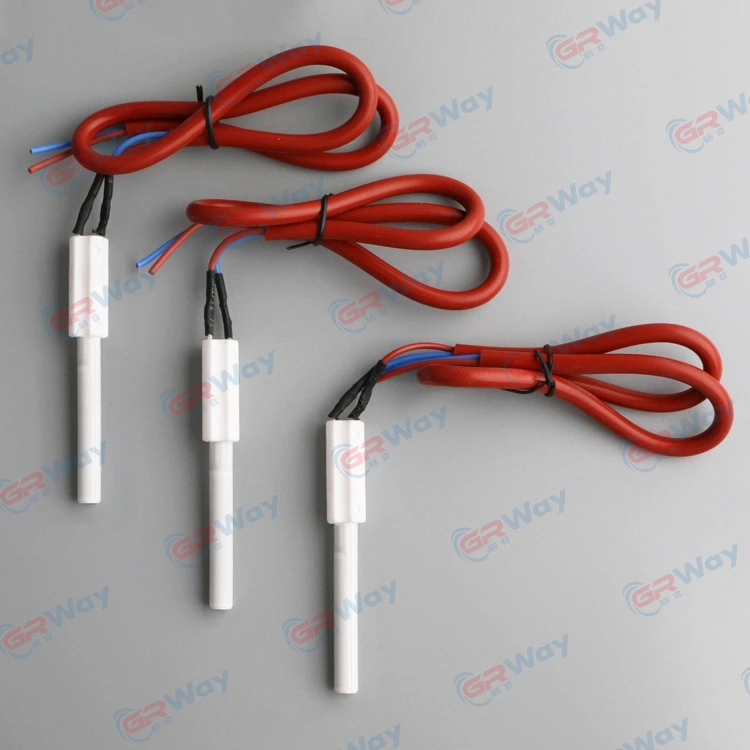
1. What Is a Ceramic Pellet Igniter?
A ceramic pellet igniter is an electric heating component designed to produce high temperatures for igniting solid fuels. It is commonly installed in pellet stoves, biomass boilers, and automatic pellet burners. When electrical power passes through its internal heating structure, the ceramic element heats up and transfers thermal energy to the surrounding fuel and airflow.
Unlike conventional ignition methods that depend on an open flame or slower external heating, ceramic hot-surface ignition provides a controlled heat source close to the combustion area. This helps initiate fuel combustion during the startup stage of a heating system.
1.1 The Basic Structure of a Ceramic Igniter
A typical alumina ceramic igniter consists of several functional components, including the ceramic heating element, internal resistance heating structure, electrical leads, ceramic holder, and connecting materials.
In our G90105 biomass boiler igniter, the heating element uses white alumina ceramic containing at least 95% alumina. The design also incorporates nickel wires, a ceramic holder, brazing material, and heat-resistant electrical cables. These components work together to support electrical heating and mechanical connection.
1.2 Alumina Ceramic and Silicon Nitride Igniters
Ceramic ignition products are available in different material configurations. Alumina ceramic is widely used in electric heating components because of its electrical insulation properties and high-temperature capability.
Our product range includes both aluminum ceramic pellet igniters and quartz crystal igniters based on silicon nitride technology. Material selection depends on the required heating characteristics, installation structure, and operating conditions of the equipment.
More information about our Ceramic Pellet Igniter product range is available on the GREENWAY website.
2. How Does Ceramic Ignition Technology Work?
The operating principle is based on electrical resistance heating. When the igniter receives its rated voltage, electrical energy is converted into heat through the internal resistance heating structure. The ceramic body then transfers this heat to the surrounding air and fuel.
2.1 Electrical Energy Is Converted into Heat
The ignition process begins when the heating element is energized. The resistance structure generates heat as current passes through it. As the temperature increases, the ceramic surface becomes a high-temperature ignition source.
2.2 Hot Air Helps Initiate Fuel Combustion
In a pellet burner, airflow is directed around the igniter and through the combustion chamber. The heated air carries thermal energy toward the fuel. When the fuel reaches its ignition conditions, combustion begins and gradually develops into a stable flame.
The airflow arrangement and the position of the igniter are important. Even a high-temperature heating element cannot deliver consistent ignition if it is poorly positioned or if the air passage is restricted.
2.3 Heat Transfer from Both Sides of the Heating Element
One characteristic of our ceramic ignition technology is that air can pass through and around the heating element. Heat transfer takes place from both the inside and outside surfaces.
This arrangement helps distribute thermal energy into the surrounding airflow and fuel area. In practical equipment design, the relationship between the igniter geometry, air passage, and fuel position has a direct influence on ignition performance.
3. How Does a Ceramic Pellet Igniter Improve Heating Performance?
A heating system needs an ignition component that can reach the required temperature without unnecessary delay. The performance of the igniter affects the startup stage and the consistency of the combustion process. Several characteristics make ceramic heating technology suitable for this task.
3.1 Faster Startup and Shorter Ignition Time
Rapid heat-up is one of the main advantages of ceramic hot-surface igniters. A high-temperature ceramic element can reach its ignition temperature quickly, reducing the waiting period before solid fuel begins to burn.
For example, our 300W ceramic pellet igniter has published reference heating performance of approximately 30 seconds to 500°C and 60 seconds to 800°C. These values illustrate the rapid response of this particular product design. Actual performance depends on the operating voltage, installation conditions, and surrounding airflow.
3.2 More Efficient Use of Electrical Energy
Fast heating helps reduce the time required for the ignition component to reach its operating temperature. This is particularly relevant in automatic biomass heating systems, where ignition may be repeated during normal operation.
The 300W product is designed to balance heating output and electrical consumption. Its published product information also indicates a power-saving advantage compared with conventional PTC ceramic heaters.
Actual system-level energy savings depend on the heater configuration, control strategy, ignition frequency, and equipment design.
3.3 More Consistent Heat Distribution
Stable temperature distribution is important because the fuel surrounding the igniter needs sufficient heat to begin combustion. A heating element with a more uniform temperature profile can help reduce localized heating differences.
Our 300W igniter is designed for rapid heating and a non-hot-spot temperature distribution. Combined with suitable airflow, this helps provide a more consistent ignition environment.
3.4 Better Resistance to Repeated Heating Cycles
Biomass heating equipment may start and stop repeatedly. The ignition component therefore needs to withstand repeated heating and cooling cycles without losing its basic functional performance.
Thermal shock resistance and load-bearing capability are important characteristics of our ceramic igniter designs. These properties help support operation under changing thermal conditions.
3.5 Resistance to Oxidation and Corrosion
Heating elements operate in environments where high temperatures, air exposure, and combustion-related conditions are present. Resistance to electrical oxidation and corrosion is therefore important for maintaining component stability.
Ceramic heating technology provides a suitable material platform for high-temperature applications. The actual service life still depends on temperature control, electrical conditions, installation, and operating cycles.
4. Why Is Ceramic Material Important?
The material used in an ignition element affects its electrical insulation, thermal performance, mechanical strength, and operating reliability. Ceramic is particularly useful in high-temperature heating applications because it combines electrical insulation with high-temperature capability.
4.1 High-Temperature Working Capability
Our high-temperature ceramic pellet igniter product range is designed for continuous working temperatures above 800°C. The 300W model lists a working temperature range of 850°C to 1050°C.
Temperature ratings should always be interpreted according to the specific product design and test conditions. The appropriate operating temperature also needs to be controlled in accordance with the equipment requirements.
4.2 Electrical Insulation
The ceramic body provides electrical insulation between the heating structure and the surrounding assembly. This is particularly important in compact heating components where the heating element operates at elevated temperatures.
4.3 Compact Structure and Thermal Efficiency
Ceramic heating elements can be manufactured in compact forms, making them suitable for equipment with limited installation space. Their high power density and rapid heating response help deliver concentrated thermal energy near the ignition area.
4.4 Mechanical and Chemical Stability
Resistance to mechanical stress and chemical exposure is also relevant in biomass equipment. Our product designs focus on thermal shock resistance, stable heating characteristics, and resistance to oxidation and corrosion.
5. Important Technical Specifications
Technical specifications should be considered before integrating an igniter into a pellet stove or biomass boiler. Voltage, power, dimensions, material, heating temperature, and mounting configuration all influence compatibility.
5.1 Reference Specifications of Our 300W Ceramic Pellet Igniter
| Parameter | Published specification |
|---|---|
| Brand | GREENWAY |
| Model | G90105 |
| Rated power | 300W |
| Main material | 95% aluminum oxide ceramic |
| Material composition | 92–96% aluminum ceramic |
| Working temperature | 850°C–1050°C |
| Heating response | Approximately 30 seconds to 500°C; 60 seconds to 800°C |
| Ignition time | 60–90 seconds (published reference) |
| Heating element dimensions | 106 mm length × 11.5 mm outer diameter |
| Flange options | Ceramic flange, copper thread, or customized options |
| Cable options | Silicone cable, fiberglass cable, or customized configuration |
| Certifications listed | RoHS, REACH, CE |
These specifications refer to the 300W model and should not be treated as universal values for every ceramic igniter. Different models may have different power ratings, dimensions, voltage requirements, and installation structures.
5.2 A Separate Reference: G90105 Biomass Boiler Igniter
The G90105 biomass boiler igniter product page also lists a specific electrical configuration and test data. Its published reference values include 120V ±10% and 230V ±10% working voltage options.
| Test item | Published reference value |
|---|---|
| Power consumption at 220V | 114W–134W |
| Power consumption at 230V | 120W–150W |
| Power consumption at 240V | 131W–160W |
| Temperature response | Within 30 seconds to 800°C; approximately 120 seconds to 940°C |
| Maximum temperature | 1050°C |
| Heating element | White alumina ceramic, at least 95% alumina |
6. Common Applications in Biomass Heating
Ceramic hot-surface ignition is particularly useful in systems that rely on solid fuels. These systems need a reliable way to initiate combustion without depending on a continuously burning external flame.
6.1 Wood Pellet Stoves
Wood pellet stoves use compressed wood pellets as fuel. During startup, the igniter heats the air and fuel near the combustion chamber until the pellets begin to burn.
Rapid ignition helps shorten the startup stage and supports automatic operation in residential and small commercial heating equipment.
6.2 Biomass Boilers
Biomass boilers use solid organic fuels to generate heat for water heating or other thermal applications. In these systems, the igniter is part of the automatic combustion-starting process.
Our biomass boiler igniter is designed for high-temperature operation and rapid heating, with configurations intended for pellet burner and biomass boiler applications.
6.3 Wood Chip and Straw Burners
Biomass fuel is not limited to compressed wood pellets. Wood chips, straw, and other agricultural materials can also be used in suitable combustion equipment.
Ignition requirements vary with fuel size, moisture content, airflow, and burner structure. The igniter position and heating characteristics should therefore match the actual combustion system.
6.4 Other Solid Biomass Fuel Systems
Ceramic igniters can also be used in equipment designed for firewood, coal briquettes, corn-based biomass, and other suitable solid fuels. The ignition design needs to account for the fuel's physical properties and the combustion chamber configuration.
| Application | Fuel type | Ignition consideration |
|---|---|---|
| Pellet stove | Wood pellets | Rapid startup and stable initial combustion |
| Biomass boiler | Wood pellets and biomass fuel | High-temperature operation and repeated ignition cycles |
| Wood chip burner | Wood chips | Airflow and fuel contact need to be considered |
| Straw burner | Straw and agricultural biomass | Ignition conditions depend on fuel preparation |
| Other biomass burners | Corn-based biomass and other solid fuels | Configuration depends on fuel and burner design |
7. What Should Be Considered When Selecting an Igniter?
Selecting an ignition element based only on its wattage or maximum temperature can lead to compatibility problems. The igniter needs to match the electrical system, installation space, airflow, and combustion requirements of the equipment.
7.1 Rated Voltage and Power
The rated voltage must match the heating equipment's electrical supply. Operating a ceramic heater above its rated voltage can cause overheating or damage. Power selection should also consider the required startup response and the equipment's electrical capacity.
7.2 Dimensions and Installation Structure
The heating element's length, outer diameter, holder dimensions, and mounting structure determine whether it fits the combustion system. The distance between the igniter and the fuel bed is equally important.
7.3 Airflow and Heat Distribution
A ceramic igniter needs suitable airflow to transfer heat toward the fuel. Restricted air passages, incorrect installation angles, or excessive distance from the fuel can affect ignition performance.
7.4 Temperature Control
Temperature control is important for both heating performance and service life. Our product instructions recommend using a temperature control device with the ceramic heater and operating it at its rated voltage.
The appropriate surface temperature should follow the specific product's technical requirements. Excessive temperature can shorten the operating life of a heating element.
7.5 Fuel Characteristics
Wood pellets, wood chips, firewood, and agricultural biomass do not behave identically during ignition. Fuel size, moisture content, density, and feeding method all influence the amount of heat and airflow required to establish combustion.
8. Our Manufacturing and Quality Control Approach
At Xiamen Green Way Electronic Technology Co., Ltd., ceramic heating elements are a core part of the company's manufacturing activities. Product development focuses on heating performance, electrical safety, material stability, and application-specific design.
8.1 Ceramic Heating Technology
Our ceramic heating products include MCH ceramic heating elements, high-temperature ceramic pellet igniters, quartz crystal igniters, silicon nitride heaters, and micro battery-operated heaters.
Different heating technologies serve different operating environments. Material selection and structural design are therefore considered according to the intended application rather than using one configuration for every heating system.
8.2 Ceramic Lamination and High-Temperature Co-Firing
Our biomass boiler igniter products are manufactured using ceramic lamination processes. The 300W ceramic pellet igniter uses high-temperature co-firing technology. Its resistance heating slurry is printed onto ceramic sheets, which are laminated and co-fired at approximately 1500–1600°C.
This manufacturing process integrates the heating structure with the ceramic material and supports the production of compact high-temperature heating components.
8.3 Inspection and Product Consistency
Electrical and physical performance are both important in ceramic heating components. Relevant inspection items include heating resistance, insulation resistance, withstand voltage, appearance, and electrical operation.
For our biomass boiler igniter, the published test requirements include insulation resistance and withstand-voltage testing, as well as checks for visible defects such as cracks, scratches, pinholes, contamination, and chipping.
A strict production quality control system, advanced equipment, and a professional R&D team support the development and production process.
8.4 Customized Heating Components
Heating equipment does not always use the same installation structure. Different manufacturers may require different dimensions, shapes, electrical configurations, cable arrangements, or mounting methods.
Our customization services cover product dimensions, structural configurations, and other application-specific requirements. This allows ceramic heating components to be adapted to different pellet burners and biomass heating equipment.
9. About Xiamen Green Way Electronic Technology Co., Ltd.
Xiamen Green Way Electronic Technology Co., Ltd. was established in 2010 and is located in Xiamen, Fujian Province, China. The company specializes in the research, development, and manufacturing of ceramic heating elements and ceramic heating cores.
Company Profile
- Company name: Xiamen Green Way Electronic Technology Co., Ltd.
- Brand: GREENWAY
- Established: 2010
- Location: Xiamen, Fujian Province, China
- Main business: Research, development, and manufacturing of ceramic heating elements
- Core products: MCH ceramic heating elements, ceramic pellet igniters, quartz crystal igniters, silicon nitride heaters, and micro battery-operated heaters
- Manufacturing capabilities: Professional R&D, advanced production equipment, and production quality control
- Services: Customized ceramic heating components
9.1 Experience in Ceramic Heating Components
Since its establishment in 2010, GREENWAY has focused on ceramic heating technology. The product range covers heating components for different temperature requirements, electrical configurations, and equipment structures.
Ceramic pellet igniters are an important part of this product range, particularly for biomass heating systems that require rapid high-temperature ignition.
9.2 Research, Development, and Customization
Our professional R&D team works with production equipment and quality control processes to develop heating components for different applications. Customization is available for customers with specific structural or technical requirements.
The objective is to provide heating components that match the actual operating conditions of the equipment, including temperature, installation space, electrical supply, and heating requirements.
9.3 A Broader Ceramic Heating Product Range
In addition to biomass ignition products, our manufacturing portfolio includes MCH ceramic heating elements, quartz crystal igniters, silicon nitride heaters, and micro battery-operated heaters.
This broader product range reflects GREENWAY's focus on ceramic heating technology and its applications across different industries.
10. Frequently Asked Questions
Q1: What is the main function of a ceramic pellet igniter?
Its main function is to generate high-temperature heat to ignite solid fuels such as wood pellets. It converts electrical energy into heat through a resistance heating structure and transfers that heat to the fuel and surrounding airflow.
Q2: How hot can a ceramic pellet igniter get?
GREENWAY's high-temperature ceramic igniter range is designed for continuous working temperatures above 800°C. The published working temperature range of the 300W model is 850°C to 1050°C. Actual operating conditions should follow the technical requirements of the specific model.
Q3: How quickly can a ceramic igniter reach its operating temperature?
The published reference performance of GREENWAY's 300W model is approximately 30 seconds to 500°C and 60 seconds to 800°C. The actual ignition time depends on the equipment, voltage, airflow, and fuel conditions.
Q4: What materials are used in ceramic pellet igniters?
Alumina ceramic is used in GREENWAY's ceramic igniter products. The G90105 biomass boiler igniter uses white alumina ceramic containing at least 95% alumina. Other ceramic heating technologies, including silicon nitride-based products, are also part of the company's product range.
Q5: Can ceramic pellet igniters be used in biomass boilers?
Yes. They are designed for applications such as pellet burners, biomass boilers, wood pellet stoves, wood chip burners, straw burners, and other suitable biomass heating equipment.
Q6: Can a ceramic igniter ignite wood chips and other biomass fuels?
Yes. Ceramic hot-surface igniters can be used in suitable systems designed for wood chips, firewood, coal briquettes, corn-based biomass, and other solid fuels. The required ignition configuration depends on the fuel and burner design.
Q7: Can GREENWAY customize ceramic igniters?
Yes. Customization is available for dimensions, shapes, installation structures, and other application-specific requirements. The configuration should be evaluated according to the equipment's technical specifications.
Q8: Why is temperature control important for ceramic heaters?
Excessive surface temperature can affect the operating life of a ceramic heating element. A suitable temperature control device helps keep the heater within its specified operating conditions.
Q9: What is the difference between an alumina ceramic igniter and a silicon nitride igniter?
They use different ceramic material technologies and may have different thermal, mechanical, and structural characteristics. The appropriate choice depends on the equipment design, heating requirements, and operating environment.
Q10: What should equipment manufacturers check before installing a ceramic igniter?
Important considerations include rated voltage, power, heating temperature, dimensions, mounting structure, cable configuration, airflow, fuel characteristics, and temperature control requirements.
Conclusion: Better Ignition Supports Better Heating Performance
A ceramic pellet igniter influences the startup performance of a biomass heating system by converting electrical energy into concentrated high-temperature heat. Rapid heating, efficient heat transfer, temperature stability, and resistance to repeated thermal cycles all contribute to reliable fuel ignition.
However, the performance of the complete heating system also depends on airflow, fuel characteristics, burner structure, electrical configuration, and temperature control. Choosing an igniter that matches these conditions is essential for consistent operation.
Xiamen Green Way Electronic Technology Co., Ltd. has focused on ceramic heating technology since 2010. With a product range covering alumina ceramic pellet igniters, quartz crystal igniters, silicon nitride heaters, and other ceramic heating components, GREENWAY continues to develop heating solutions for different industrial and biomass applications.
Through material selection, ceramic manufacturing processes, product testing, and customized design, GREENWAY aims to provide reliable heating components for modern biomass ignition systems. The right ceramic heating element is not simply a source of heat; it is an important part of the overall ignition and heating process.
For additional technical information, see the GREENWAY Ceramic Pellet Igniter product range and its related biomass heating applications.