


Aluminum Nitride Ceramic for High-Power Electronics?
Thermal management becomes increasingly difficult as electronic devices become smaller, faster, and more power-dense. A substrate material must move heat efficiently while maintaining electrical insulation, dimensional stability, and mechanical reliability. That combination is why aluminum nitride-based ceramics continue to attract attention in power modules, semiconductor equipment, RF systems, LED packages, and other demanding electronic assemblies.
A Practical View of the Material
Aluminum nitride is a high-performance technical ceramic valued for its combination of thermal conductivity, electrical insulation, low thermal expansion, corrosion resistance, and stability under demanding operating conditions. These characteristics make it particularly useful where conventional alumina cannot provide enough thermal performance or where metallic heat spreaders cannot provide the required dielectric isolation. The right material choice, however, depends on more than thermal conductivity alone. Purity, porosity, grain structure, thickness, surface finish, metallization method, thermal cycling, atmosphere, and assembly design can all influence actual performance.
A useful engineering approach is to begin with the heat source, define the required electrical isolation, map the thermal path, and then evaluate the ceramic body and its interfaces as one system. That method helps avoid choosing a material based on a single headline specification while overlooking mechanical stresses, joining limitations, or environmental exposure.
Table of Contents
Select a section to jump directly to it.
- What Makes This Ceramic Different From Conventional Technical Ceramics?
- Why Is Thermal Conductivity So Important in Electronic Assemblies?
- How Does Electrical Insulation Change the Design Approach?
- Which Material Properties Should Engineers Compare?
- Where Is It Commonly Used?
- How Should the Thermal Path Be Designed?
- What Manufacturing Factors Affect Final Performance?
- How Can Reliability Be Evaluated Before Integration?
- What Should Be Checked Before Selecting a Grade?
- Frequently Asked Questions
What Makes This Ceramic Different From Conventional Technical Ceramics?
Aluminum nitride belongs to the family of advanced nitride ceramics, but its engineering value is not based on hardness or temperature resistance alone. Its main attraction is the combination of useful thermal transport with electrical insulation. In a high-power electronic assembly, that combination can simplify the thermal path without forcing the electrically active structure to sit directly on a conductive metal surface.
Traditional alumina ceramics are widely used because they offer good insulation, established processing methods, chemical stability, and broad industrial availability. Their thermal conductivity, however, is generally much lower than that of high-performance aluminum nitride grades. When heat density increases, the difference can become important because every thermal interface adds resistance between the active component and the final heat sink.
Aluminum nitride also has a coefficient of thermal expansion that is relatively close to that of silicon and several semiconductor materials. That does not eliminate thermal stress, but it can help reduce expansion mismatch in carefully designed assemblies. In practice, this becomes relevant for solder joints, metallized ceramic substrates, semiconductor packages, and structures exposed to repeated heating and cooling.
Heat Transfer
Dense grades can provide substantially higher thermal conductivity than many common insulating ceramics, helping heat move laterally through a substrate and toward a cooler interface.
Dielectric Isolation
The ceramic body maintains electrical insulation while still serving as part of the thermal path, which is important in power electronics and electrically isolated mounting structures.
Thermal Expansion
A relatively low expansion coefficient supports compatibility with semiconductor components and can reduce differential movement compared with materials that expand more strongly with temperature.
Chemical Stability
The material can resist many chemical environments and is not easily softened by ordinary thermal exposure, although the actual service limit depends on atmosphere, surface condition, purity, and temperature history.
Another distinguishing feature is that properties are strongly influenced by microstructure. Two ceramic bodies can share the same nominal composition while behaving differently because of grain size, oxygen content, porosity, impurities, sintering conditions, and surface preparation. For that reason, an engineering specification should describe the required property range and test method rather than relying only on a material name.
Why Is Thermal Conductivity So Important in Electronic Assemblies?
Heat generated inside a semiconductor device must travel through several layers before it reaches a heat sink, cold plate, housing, or other cooling structure. A typical path may include the device package, attach material, metallization, ceramic substrate, interface layer, and heat spreader. If one layer creates significant thermal resistance, the entire stack can become temperature-limited even when the surrounding cooling system appears large enough.
Thermal conductivity is often expressed in watts per meter-kelvin, but the number alone does not tell the whole story. Thickness matters. Area matters. Contact resistance matters. The quality of the bond between the ceramic and metal also matters. A thin ceramic layer with strong thermal conduction can behave differently from a much thicker body made from the same material.
For a simplified one-dimensional section, conductive heat flow can be described by Fourier's law. The thermal resistance of a flat layer can be approximated by thickness divided by the product of thermal conductivity and cross-sectional area. This relationship immediately shows why a thinner, highly conductive ceramic can reduce temperature rise when other variables remain controlled.
Thermal conductivity can also vary with temperature and material purity. Some high-performance grades are engineered for demanding heat-spreading applications, while other formulations are optimized for manufacturability, dielectric performance, mechanical characteristics, or a particular processing route. In a production component, the useful specification is therefore the property of the actual grade and thickness being purchased, not a generic value associated with the chemical formula.
How Does Electrical Insulation Change the Design Approach?
A heat spreader made from a conventional metal is naturally attractive from a thermal perspective, but a metal layer is electrically conductive. In many power and semiconductor assemblies, the thermal path and electrical path cannot be treated independently. The designer may need a material that carries heat outward while preventing unwanted current flow between the active circuit and the mounting structure.
A dense ceramic can perform this separation function. Its dielectric behavior enables components to be mounted or metallized on a surface while the underlying ceramic provides insulation. This is especially useful in circuits operating at elevated voltage or in assemblies where multiple electrical nodes share a common mechanical support.
Dielectric strength is only part of the electrical picture
Electrical insulation requirements normally include more than dielectric strength. Surface leakage, dielectric loss, insulation resistance, creepage distance, contamination, humidity, and the geometry of the metallization pattern may all influence performance. A ceramic with good intrinsic insulation can still encounter electrical problems if the surface is contaminated or if the package geometry creates an insufficient leakage path.
- Define the operating voltage and transient conditions before selecting a ceramic thickness.
- Review insulation resistance under the actual environmental conditions rather than only at room temperature.
- Consider the surface finish and metallization structure because electrical behavior occurs at the interfaces as well as through the bulk ceramic.
- Check edge geometry, conductor spacing, and contamination exposure when the assembly operates at elevated voltage.
- Validate insulation after thermal cycling when mechanical movement or interface stress may change the surface condition.
This is one reason advanced ceramic substrates are often treated as functional components rather than simple insulating plates. The ceramic body, metal layer, attach material, conductor pattern, and mounting surface must work together.
Which Material Properties Should Engineers Compare?
Selecting a ceramic for an electronic assembly is best handled as a multi-property comparison. A grade with excellent thermal conductivity may not be the most appropriate choice if it cannot meet dimensional tolerances, metallization requirements, mechanical loading, or the intended joining process.
| Property | Why It Matters | Questions to Ask | Typical Design Consideration |
|---|---|---|---|
| Thermal Conductivity | Controls how effectively heat spreads through the ceramic body. | What value applies to the selected grade, thickness, and test temperature? | Compare the entire thermal stack, not the ceramic alone. |
| Thermal Expansion | Influences stress when the ceramic is joined to silicon, metals, or other materials. | How closely does the expansion behavior match the adjacent layer? | Important during heating, cooling, soldering, and repeated operation. |
| Dielectric Performance | Defines the insulating function of the substrate. | What insulation resistance, dielectric strength, and loss characteristics are required? | Account for voltage, frequency, humidity, contamination, and geometry. |
| Mechanical Strength | Affects handling, assembly, mounting, vibration, and thermal shock. | What loads and temperature changes will the part experience? | Do not judge mechanical reliability from hardness alone. |
| Surface Finish | Affects metallization, bonding, contact quality, and dimensional fit. | What roughness, flatness, parallelism, and edge condition are required? | Specify measurement methods along with numerical limits. |
| Purity and Microstructure | Can influence thermal behavior, insulation, strength, and long-term stability. | What purity level and processing route apply to the material? | Compare production consistency as well as nominal composition. |
Among these properties, thermal conductivity often receives the greatest attention because it is easy to compare numerically. However, reliability problems frequently arise from the interaction between properties. For example, a mismatch in thermal expansion can create repeated stress even when heat conduction is excellent. Likewise, a surface that is technically flat may still be unsuitable for a specific bonding process if the roughness or cleanliness is outside the required range.
The practical lesson is simple: create a property hierarchy before requesting material data. Separate mandatory requirements from preferred characteristics, identify the test method for each critical metric, and evaluate the ceramic in the context of the complete assembly.
Where Is It Commonly Used?
The material is relevant wherever heat generation, electrical insulation, and compact construction appear in the same design. Applications vary from relatively simple insulating components to sophisticated semiconductor packages and high-temperature equipment.
Power semiconductor substrates
Power switches generate heat during conduction and switching. As current density and switching frequency rise, the thermal path becomes more important. Ceramic substrates can provide electrical isolation between the active circuit and the metal backing while also spreading heat toward the cooling structure.
LED and solid-state lighting structures
High-power LEDs convert a portion of electrical input into heat. If junction temperature rises excessively, light output, lifetime, and operating stability can be affected. A thermally conductive insulating substrate can help move heat away from the emitting device while maintaining electrical separation between circuit features and the mounting structure.
RF and high-frequency electronics
RF systems can combine high power density with strict electrical requirements. Packaging materials must control heat while maintaining predictable electrical behavior. Low expansion and stable dielectric performance can become valuable when the package experiences temperature changes or contains closely integrated components.
Semiconductor processing equipment
Ceramic heater structures and support components used in semiconductor manufacturing may encounter repeated thermal cycles, controlled atmospheres, and stringent dimensional requirements. Aluminum nitride is attractive for such environments because it can combine heat transfer and electrical insulation in one ceramic platform.
High-temperature sensors and specialized electronic hardware
Sensors, inspection systems, and specialized industrial electronics may operate near heat sources where polymeric insulation becomes difficult to use. Ceramics can retain shape and electrical insulating performance across a much wider temperature range than many organic materials, subject to the selected composition and atmosphere.
- Power modules and insulated circuit substrates
- High-output LED assemblies and thermal management structures
- RF power components and compact electronic packages
- Semiconductor heaters, supports, and process hardware
- High-temperature electronic fixtures and specialized sensors
How Should the Thermal Path Be Designed?
A ceramic substrate works best when the surrounding assembly is designed to complement its thermal characteristics. The objective is not simply to place a high-conductivity ceramic between a device and a heat sink. The full path must minimize avoidable resistance at every stage.
Start at the heat source
Define where the heat originates and how concentrated it is. A small semiconductor die can produce a severe local hot spot even when the overall power level appears manageable. The ceramic must spread the heat across a sufficient area before the heat reaches the next interface.
Control the interfaces
Thermal interface materials, solder layers, brazed joints, and metallized surfaces can introduce resistance that partially offsets the advantage of the ceramic body. Excessive thickness, voids, uneven contact, contamination, and poor wetting should therefore be treated as thermal design issues rather than only assembly defects.
Evaluate thickness carefully
Increasing ceramic thickness can improve mechanical robustness in some structures, but it also increases the conductive path length. Reducing thickness can improve the theoretical through-thickness thermal path while creating new concerns related to handling, flatness, mechanical stress, and manufacturing yield. The correct thickness is therefore a system decision.
- Estimate heat generation under the highest credible operating condition.
- Map every thermal layer between the active component and final cooling structure.
- Calculate the contribution of bulk conduction and interface resistance separately.
- Check temperature gradients across the ceramic rather than looking only at the average temperature.
- Validate the assembled part under realistic duty cycles and thermal transients.
This distinction becomes especially important when comparing direct-bonded structures, metallized substrates, ceramic heaters, and mechanical support parts. The same ceramic grade can show very different thermal behavior after processing because the final heat path depends on geometry, metallization coverage, joining layers, and cooling architecture.
What Manufacturing Factors Affect Final Performance?
Ceramic performance begins with powder preparation and continues through forming, sintering, machining, surface treatment, metallization, inspection, and packaging. Every stage can influence the final part. A material specification that looks strong on paper can still produce inconsistent results if process control is weak.
Powder purity and composition
Aluminum nitride is sensitive to impurities because secondary phases and oxygen-related surface chemistry can influence thermal transport. High-purity starting materials and controlled processing help maintain consistent properties, but the appropriate purity level should be matched to the intended application rather than treated as an abstract quality label.
Sintering and densification
The sintering stage is central to final density and microstructure. Incomplete densification can create pores that interfere with thermal conduction and mechanical performance. Excessive grain growth or unsuitable additives can also alter the balance between thermal, mechanical, and electrical properties.
Machining and dimensional control
Technical ceramics are hard and relatively brittle, so machining requires appropriate abrasive processes and process control. Flatness, thickness, hole diameter, edge chipping, and parallelism may all become critical when the ceramic is integrated with semiconductor packages or precision assemblies.
Metallization
Bare ceramic performance is only one part of an electronic substrate. Copper, molybdenum, tungsten, gold, nickel, silver, or other metal systems may be applied depending on the joining and electrical architecture. The interface between ceramic and metal must withstand thermal cycling without excessive cracking, delamination, or fatigue.
- Ask which ceramic grade is used and which property ranges are controlled in production.
- Confirm whether thermal conductivity is measured on production material or an ideal laboratory formulation.
- Specify dimensional tolerances, flatness, surface roughness, and allowable edge condition.
- Define metallization requirements early when the ceramic will be bonded, soldered, brazed, or wire-connected.
- Confirm inspection methods for critical electrical and mechanical characteristics.
For engineers sourcing a production component, traceability and process consistency can be as important as the maximum property value. Stable manufacturing conditions help reduce lot-to-lot variation, which matters when ceramic parts are assembled into systems with narrow thermal or electrical margins.
How Can Reliability Be Evaluated Before Integration?
Reliability testing should reflect the actual failure mechanisms expected in service. A single room-temperature dimensional inspection cannot reveal how a ceramic substrate behaves after hundreds or thousands of temperature transitions. Likewise, a short dielectric test may not capture long-term insulation behavior under humidity or contamination.
Thermal cycling
Repeated heating and cooling create expansion and contraction in the ceramic, metal layers, joining materials, and mounting structure. If their thermal expansion coefficients differ, the assembly experiences cyclic stress. The severity depends on temperature range, transition speed, geometry, joint thickness, and the number of cycles.
Thermal shock
Thermal shock places a stronger emphasis on rapid temperature change. A ceramic can tolerate a broad temperature range yet perform differently when exposed to a sudden transition because steep internal temperature gradients can generate localized stresses.
Electrical endurance
High-voltage structures should be evaluated for insulation resistance, dielectric strength, leakage, and behavior after environmental conditioning. Edge effects and metallization geometry should be included in the test configuration whenever they resemble the final product.
Mechanical handling
Ceramics can be strong in compression but comparatively sensitive to tensile stress, bending, edge damage, and surface flaws. Packaging and handling procedures therefore matter. A part that passes laboratory testing can still fail during assembly if its edges are chipped or if hidden surface damage is introduced during machining.
Environmental exposure
Temperature, humidity, corrosive gases, vacuum, cleaning chemicals, and process atmospheres should be considered according to the final application. Nitride ceramics can perform well in demanding environments, but no material should be assigned a universal service limit without considering atmosphere and exposure time.
What Should Be Checked Before Selecting a Grade?
Material selection becomes more efficient when the engineering requirements are written as a structured checklist. Instead of starting with a preferred ceramic and trying to make the system fit around it, define the operating conditions first and then compare suitable grades.
| Selection Area | What to Define | Why It Matters |
|---|---|---|
| Thermal Requirement | Heat generation, temperature range, allowable temperature rise, thermal path, and cooling method. | Prevents the ceramic from being selected using conductivity alone. |
| Electrical Requirement | Voltage, frequency, insulation resistance, dielectric strength, leakage path, and surface conditions. | Ensures the ceramic performs as an electrical insulator within the actual design. |
| Mechanical Requirement | Load, vibration, mounting force, edge condition, dimensional tolerance, and thermal stress. | Helps reduce cracking and assembly-related damage. |
| Manufacturing Requirement | Thickness, shape, holes, surface finish, metallization, joining method, and inspection criteria. | Improves manufacturability and consistency between design and production. |
| Environment | Humidity, atmosphere, chemicals, vacuum, operating temperature, and thermal cycling profile. | Defines the real service conditions that influence long-term stability. |
A strong specification should also distinguish between guaranteed limits and typical values. “Typical” describes what may commonly be achieved under a defined test condition; it does not automatically establish a production acceptance criterion. When a property is critical, the required value, test method, measurement direction, test temperature, and allowable variation should be stated clearly.
The same principle applies to dimensions. A ceramic plate can be thermally excellent and electrically suitable but unusable if its flatness, hole position, edge condition, or thickness variation conflicts with the assembly process. Precision is therefore part of material performance whenever the component interacts closely with other layers.
How the final specification can be structured
- Application and operating environment
- Target thermal conductivity range and measurement condition
- Electrical insulation requirements
- Required thickness, dimensions, flatness, and surface finish
- Mechanical loading and thermal cycling conditions
- Metallization or joining requirements
- Inspection method and acceptable dimensional variation
Clear specifications improve communication between design engineers, material engineers, and manufacturing teams. They also make it easier to compare different ceramic options on equivalent criteria rather than on isolated marketing figures.
What Does Good Integration Look Like in Practice?
A well-designed ceramic component disappears into the system in the best possible way: it transfers heat, maintains electrical isolation, stays dimensionally stable, and survives the expected mechanical and environmental conditions without becoming the limiting factor.
Consider a power electronics assembly in which a semiconductor die is mounted onto a metallized ceramic substrate. The designer must think simultaneously about heat generation at the die, heat spreading across the ceramic, thermal transfer through the joining layer, electrical isolation from the metal backing, and expansion mismatch between the die, ceramic, metal, and solder. Improving one layer without considering the others may simply move the bottleneck.
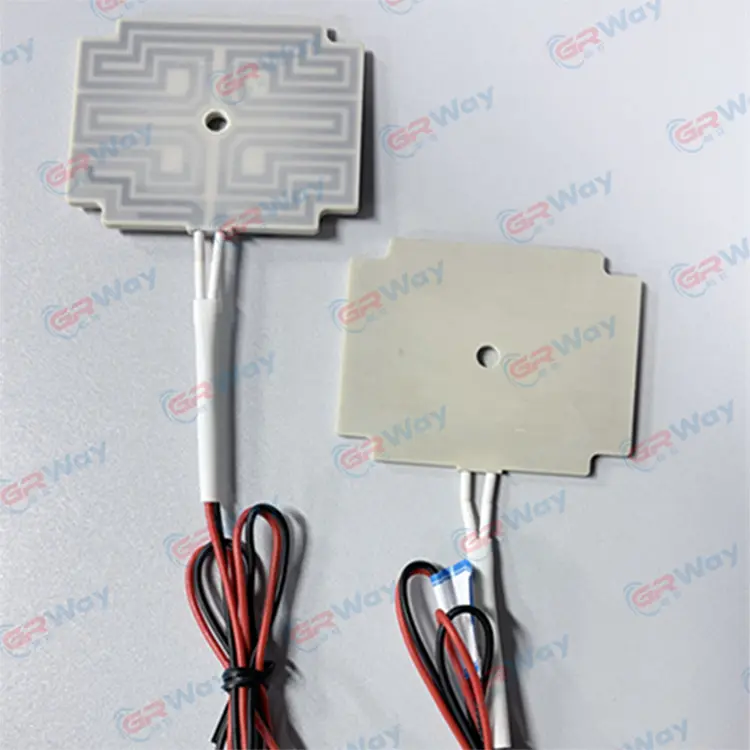
Another practical example is a ceramic heater used in semiconductor processing. Here, heat generation must be uniform enough for the process, electrical insulation must remain stable, the ceramic must survive repeated heating, and the geometry may need to accommodate electrodes, mounting features, and controlled surface temperatures. Material selection and heater architecture therefore become closely linked.
The engineering objective is not necessarily to maximize one property. Instead, it is to achieve the right combination of thermal, electrical, mechanical, dimensional, and environmental characteristics for a defined application.
For this reason, discussions with a ceramic manufacturer should begin with operating conditions and part requirements rather than only a material name. Drawings, thickness, thermal duty cycle, voltage, interface materials, metallization, and dimensional tolerances provide the context needed to determine whether a ceramic solution is technically appropriate.
How Should Engineers Read a Technical Datasheet?
Datasheets are useful starting points, but they should be read as controlled measurement documents rather than as universal descriptions of every possible part. Look for the test method, specimen shape, density, temperature, direction of measurement, and definition of each property.
Thermal conductivity is particularly sensitive to material condition. A high value measured on a dense, polished test piece may not represent the effective performance of a production assembly with metallization, joints, voids, or local geometry. Electrical properties can also depend on measurement frequency and environmental conditions.
Typical questions behind a good datasheet review
- Is the listed property typical, minimum, maximum, or guaranteed?
- What test standard and measurement direction were used?
- Was the test performed at room temperature or at an elevated operating temperature?
- Does the stated density correspond to the production grade used for the intended component?
- Are dimensions reported before or after the complete finishing process?
- Does the published surface condition match the joining or metallization process required?
Asking these questions turns material selection into an engineering comparison instead of a simple product-label comparison. This is especially useful when multiple ceramic families appear suitable at first glance.
Alumina remains a practical choice for many electrically insulating ceramic parts because it combines established manufacturing, good dielectric behavior, wear resistance, and broad application experience. Aluminum nitride becomes particularly attractive when substantially better thermal transport is required while electrical insulation remains essential. The choice should still be made from the complete specification rather than from one property.
Why Is This Material Relevant to More Compact Electronics?
Electronics continue to place more functions into smaller spaces. Higher power density means local heat flux can become difficult to manage even when the total device size is shrinking. At the same time, designers increasingly need electrical isolation, compact packaging, rapid thermal response, and reliable performance across repeated temperature changes.
A thermally conductive insulating ceramic addresses several of these constraints simultaneously. It can spread heat through a compact substrate while separating the active electrical structure from a conductive mounting frame. That combination is valuable in applications where there is little room to add a larger heat sink or a thicker thermal interface.
The future role of advanced ceramics will also depend on manufacturing precision. As electronic assemblies become thinner and more integrated, flatness, metallization accuracy, surface quality, and controlled microstructure become increasingly important. Material performance and manufacturing capability are therefore connected more closely than they may appear from a simple material datasheet.
Higher Integration
Compact substrates can combine electrical isolation and heat spreading without requiring separate insulating and thermal layers in every design.
Better Thermal Control
Effective lateral heat spreading can reduce concentrated hot spots and support more stable temperature distribution across the active area.
More Precise Packages
Controlled thickness, flatness, metallization, and surface finish help advanced ceramic parts fit demanding electronic assemblies.
Application Flexibility
The same material family can support substrates, heater structures, insulators, supports, and other components when the grade and processing route are matched correctly.
Frequently Asked Questions
What is the main advantage of aluminum nitride as an electronic ceramic?
Its central advantage is the combination of relatively high thermal conductivity with electrical insulation. That makes it useful where an electronic assembly must transfer heat efficiently without electrically connecting the active circuit to the supporting metal structure.
Is aluminum nitride suitable for high-temperature applications?
It can be suitable for demanding temperature environments, but the usable temperature range depends on the ceramic grade, atmosphere, surface condition, thermal cycling, and component design. High-temperature performance should therefore be specified against the actual operating environment rather than a single universal temperature figure.
How does it compare with alumina?
Both can provide electrical insulation and good chemical stability. The major distinction is that suitable aluminum nitride grades generally offer substantially better thermal conductivity. Alumina may remain appropriate when thermal requirements are moderate or when its established processing and mechanical characteristics fit the application better.
Can the ceramic be metallized?
Yes. Various metallization systems can be used depending on the intended electrical connections and joining method. The selected metal system, surface finish, ceramic grade, thermal expansion behavior, and bonding process all need to be considered together.
Does a higher thermal conductivity value always mean a better component?
No. Thermal conductivity is only one factor. Thickness, flatness, interface resistance, mechanical strength, dielectric performance, thermal expansion, metallization, geometry, and production consistency may all determine whether the finished component performs well.
What information should be provided when requesting a technical ceramic part?
Useful information includes the application, operating temperature, voltage, thermal load, dimensions, thickness, surface finish, flatness, hole or feature requirements, joining method, metallization needs, environmental conditions, and expected thermal cycling. A technical drawing can make this information easier to evaluate.
Can the same grade be used for every ceramic application?
Not necessarily. A grade optimized for thermal management may have different characteristics from one selected for a heater, insulating support, or precision structural component. The appropriate grade depends on the balance of thermal, electrical, mechanical, dimensional, and environmental requirements.
Why do ceramic thickness and flatness matter so much?
Thickness directly affects the conductive path, while flatness influences contact quality and mechanical stress during assembly. A ceramic substrate with good bulk thermal properties can still perform poorly when excessive thickness or poor flatness creates a significant interface penalty.
Where Does the Material Fit in a Reliable Engineering Strategy?
Aluminum Nitride Ceramic is best understood as a functional engineering material that connects thermal management, electrical insulation, dimensional control, and mechanical reliability. Its value becomes clearest when the ceramic is considered as part of the complete thermal and electrical architecture rather than as an isolated plate or substrate.
For high-power electronics, the key questions are how quickly heat can leave the active region, how effectively the ceramic spreads that heat, how electrical isolation is maintained, and how the material behaves during assembly and repeated operation. For semiconductor equipment and heater structures, temperature uniformity, dimensional stability, joining, and environmental compatibility may become equally important.
The most dependable selection process starts with operating conditions and ends with a measurable material specification. Thermal conductivity, expansion coefficient, dielectric behavior, strength, density, surface finish, dimensions, metallization, and environmental exposure should be reviewed together. Production consistency should also be considered because a sophisticated design depends on repeatable material performance.
When these factors are defined clearly, advanced nitride ceramics can provide a practical route to compact, thermally managed, electrically insulated assemblies for demanding electronic and industrial applications.
Need a Ceramic Material Discussion for Your Application?
Share the operating temperature, thermal load, voltage, dimensions, thickness, surface requirements, joining method, and other critical conditions. A clear application specification makes it easier to discuss material grade, processing route, and component configuration.
contact usTechnical requirements are best evaluated from the complete component specification and intended operating environment.