


As electronic devices become smaller while power density continues to rise, the material between a heat-generating component and its cooling path becomes increasingly important. High thermal conductivity alone is not enough. Engineers also need electrical insulation, controlled thermal expansion, mechanical stability, chemical resistance, and reliable performance through repeated temperature changes. These combined requirements explain why advanced ceramics are increasingly considered for demanding thermal and electrical interfaces.
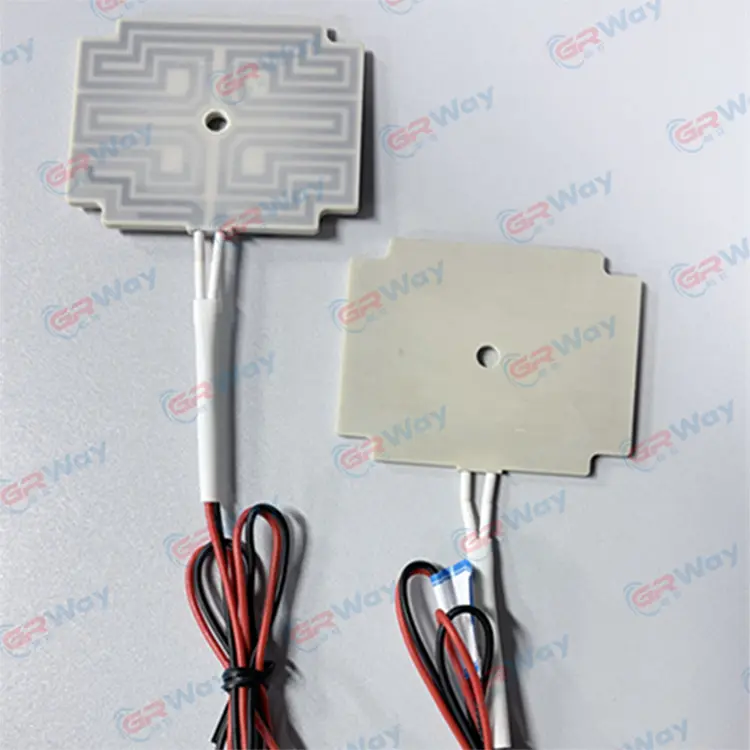
Aluminum Nitride Ceramic is an advanced technical ceramic valued for the combination of high thermal conductivity and electrical insulation. Unlike electrically conductive metals that remove heat but require additional insulation, dense AlN can provide a direct ceramic platform for heat spreading while maintaining dielectric separation. Its relatively low coefficient of thermal expansion also makes it compatible with semiconductor materials such as silicon. These characteristics support applications in high-power electronics, semiconductor equipment, laser systems, LED packages, power modules, microwave components, and specialized thermal structures. A practical selection process must consider thermal conductivity, purity, dielectric behavior, geometry, surface finish, dimensional tolerance, metallization, joining method, operating temperature, and the actual thermal path of the finished assembly.
Table of Contents
Jump to a sectionSelect a section below to move directly to the topic.
- What Is the Material and Why Does It Matter?
- How Does Thermal Conductivity Support Heat Management?
- How Does Electrical Insulation Improve Component Design?
- Why Does Thermal Expansion Compatibility Matter?
- How Is the Material Manufactured and Densified?
- Which Material Factors Control Final Performance?
- Which Forms and Geometries Are Used in Engineering?
- Where Is It Used in Advanced Electronics?
- How Does It Compare With Other Technical Ceramics?
- How Should Engineers Specify the Material?
- Frequently Asked Questions
What Is the Material and Why Does It Matter?
Aluminum nitride is a non-oxide technical ceramic formed from aluminum and nitrogen. Its crystal structure and strong atomic bonding give it a distinctive combination of thermal, electrical, mechanical, and chemical properties. The material is particularly valuable when a component must conduct heat efficiently without becoming an electrical conductor.
In a conventional thermal path, designers often think of heat spreaders and insulation as separate functions. A metal plate may spread heat rapidly, while a polymer or oxide ceramic layer provides electrical isolation. Every additional interface introduces thermal resistance, mechanical complexity, or another potential failure point. A dense AlN component can combine several functions in a single engineered layer, simplifying the architecture of certain power and semiconductor assemblies.
High lattice-based thermal transport allows heat to move away from localized hot spots and toward a heat sink or cooling interface.
High electrical resistivity allows conductive traces and powered components to remain electrically isolated from supporting structures.
A low thermal expansion coefficient helps reduce stress when ceramic components are joined with semiconductor and metallic materials.
The practical importance of the material therefore comes from the interaction of its properties rather than a single headline specification. For a high-power device, a substrate with strong thermal performance but poor dimensional stability may create reliability problems. A ceramic with excellent insulation but insufficient heat spreading may allow the junction temperature of an electronic component to rise. Material selection must consider the complete thermal and electrical system rather than one isolated number.
How Does Thermal Conductivity Support Heat Management?
Thermal conductivity describes how effectively heat moves through a material under a temperature gradient. In high-power electronics, this property directly influences how quickly heat can move away from a semiconductor die, power device, laser, LED, or other heat-generating component.
Dense AlN is often produced with thermal conductivity in the approximate range of 140 to 230 W/m·K, depending on purity, microstructure, processing conditions, and product grade. Higher-conductivity grades can be engineered when the application requires more efficient heat spreading. Actual performance should always be evaluated using the manufacturer's stated value for the specified material grade and geometry.
Why heat spreading is more complicated than conductivity
A high conductivity value does not automatically guarantee low temperature at the active device. The total thermal path may include the semiconductor die, bonding layer, ceramic substrate, metallization, thermal interface material, base plate, heat sink, and cooling medium. Each interface adds resistance. A well-designed ceramic substrate therefore works as one part of an engineered thermal network.
Geometry is also important. A thin ceramic layer can reduce conduction distance, but it must still meet voltage insulation, mechanical strength, handling, and joining requirements. A thicker part may increase electrical spacing and mechanical robustness while adding thermal resistance. Engineers must balance these requirements instead of optimizing one variable independently.
| Property | Typical Engineering Range | Why It Matters | Design Consideration |
|---|---|---|---|
| Thermal Conductivity | Approx. 140–230 W/m·K | Moves heat through the ceramic | Use the grade-specific tested value |
| Coefficient of Thermal Expansion | Approx. 4.0–4.7 × 10⁻⁶/K | Controls dimensional change with temperature | Compare with die, copper, aluminum, and joining layers |
| Dielectric Constant | Typically around 8–9 | Influences electrical and RF behavior | Check frequency and temperature conditions |
| Density | Approx. 3.26 g/cm³ | Affects component mass and structural design | Consider porosity and final sintered density |
| Electrical Resistivity | Very high for dense insulating grades | Supports electrical isolation | Verify insulation requirements under actual conditions |
Values shown are general engineering ranges rather than universal specifications. Production grades can differ according to purity, additives, processing route, density, dimensions, and test conditions.
Thermal conductivity can also change as temperature rises. For realistic thermal design, engineers should use temperature-dependent material data when available instead of assuming that a room-temperature value remains constant throughout the operating range.
How Does Electrical Insulation Improve Component Design?
Power electronics often require two apparently opposite functions: the substrate must remove heat effectively while preventing unwanted electrical current from flowing into neighboring structures. Metals provide excellent thermal conduction but are electrically conductive. Many engineering ceramics solve the insulation problem, but not all offer sufficiently high thermal conductivity for modern power densities.
The high electrical resistivity of dense AlN allows conductive circuits to be mounted or metallized on a ceramic insulating body. This is one reason ceramic substrates are used in power semiconductor modules, LED assemblies, laser packages, and specialized electronic structures.
Electrical isolation without creating a large thermal barrier
In a conventional multilayer thermal stack, insulation can become the limiting factor in heat transfer. An electrically insulating material with low thermal conductivity may protect the circuit electrically while trapping heat close to the active device. A thermally conductive ceramic reduces this compromise by allowing heat to move through the insulating body.
Dielectric behavior also matters
Electrical insulation is not defined only by resistivity. Designers may also evaluate dielectric constant, dielectric loss, breakdown strength, surface leakage, creepage distance, and the effect of temperature or humidity on electrical behavior.
For high-frequency systems, dielectric properties can influence impedance, signal integrity, parasitic capacitance, and RF losses. For high-voltage systems, physical thickness and surface design become especially important. A material can have strong intrinsic insulation properties while the finished component still requires careful spacing and surface engineering.
Electrical isolation allows metallized conductors and power devices to operate on an insulating ceramic platform while heat travels through the substrate.
Controlled dielectric behavior can support stable electrical performance where parasitic capacitance and dielectric loss need to be managed.
Why Does Thermal Expansion Compatibility Matter?
Every material changes dimension when its temperature changes. In a multilayer electronic package, different materials expand at different rates. If these differences are large, repeated heating and cooling can generate mechanical stress at interfaces.
The coefficient of thermal expansion of dense AlN is close to that of silicon, commonly around 4.0 to 4.7 × 10⁻⁶/K for typical engineering grades. This relative compatibility is particularly valuable in semiconductor packaging because excessive thermal expansion mismatch can contribute to warpage, interfacial stress, cracking, or delamination during thermal cycling.
Why thermal cycling deserves special attention
Electronic systems rarely remain at one temperature. A power module may repeatedly move between idle, moderate load, peak load, and shutdown. A laser package may experience repeated startup and cooling periods. Semiconductor production equipment can be exposed to process temperatures followed by cooling phases.
Each thermal cycle creates expansion and contraction. When the materials are bonded together, the interfaces must accommodate their relative movement. Matching thermal expansion does not eliminate stress completely, but it can reduce one important source of mechanical mismatch.
Material pairing should be evaluated as a system
The ceramic is only one layer within the assembly. Copper, aluminum, silicon, solder, brazed joints, metallization systems, and thermal interface materials can all contribute to total stress. Engineers should therefore compare the expansion coefficients of the complete material stack rather than evaluating the ceramic in isolation.
- Compare CTE values across the complete assembly rather than between two materials only.
- Evaluate thermal cycling temperatures, dwell times, and cycle counts.
- Consider thickness and geometry because stiffness affects stress distribution.
- Check joining and metallization methods for their own thermal limitations.
- Use actual assembly conditions for mechanical reliability validation.
How Is the Material Manufactured and Densified?
The performance of an advanced ceramic depends strongly on its manufacturing route. High thermal conductivity is difficult to obtain if the final body contains excessive porosity, unfavorable impurity phases, or microstructural defects that scatter heat-carrying phonons.
Powder preparation
Production starts with aluminum nitride powder selected for suitable purity and particle characteristics. Powder quality influences packing behavior, sintering response, grain development, and the final electrical and thermal properties of the ceramic.
Forming and green machining
Depending on the component design, powder may be shaped by processes such as tape casting, pressing, injection molding, or other ceramic forming methods. Thin substrates can require especially controlled forming because the final part must maintain flatness and dimensional stability after firing.
Sintering and densification
Aluminum nitride has strong covalent bonding, which makes densification more demanding than for some conventional oxide ceramics. Sintering aids can be introduced to promote densification and control grain-boundary phases. Processing temperature, atmosphere, powder chemistry, additive system, and firing schedule all influence the final microstructure.
- Powder conditioning: Raw ceramic powder is prepared for consistent particle distribution, purity, and forming behavior.
- Shaping: The powder is formed into a green body corresponding to the required component geometry.
- Controlled sintering: Thermal processing densifies the body and develops the required grain structure.
- Finishing: Surfaces may be ground, polished, lapped, drilled, cut, or otherwise processed according to design requirements.
- Inspection: Dimensions, surface quality, electrical behavior, thermal properties, and other customer-defined characteristics can be evaluated.
Machining after sintering requires appropriate diamond-based or other specialized tooling because advanced ceramics are hard and brittle. The design stage should therefore account for achievable tolerances, corner radii, hole geometry, surface finish, and potential edge damage.
Which Material Factors Control Final Performance?
Two components made from the same nominal material can perform differently because the processing history is different. Thermal conductivity, strength, dielectric behavior, and dimensional stability are affected by grain structure, porosity, impurity levels, additive chemistry, and sintering conditions.
Purity and oxygen-related effects
Oxygen is an important consideration in AlN processing because oxygen-related defects and secondary phases can affect lattice behavior and thermal transport. Excessive impurity content can reduce thermal conductivity, which is why high-performance grades require careful powder control and densification.
Porosity
Internal pores interrupt continuous heat-transfer paths and can reduce mechanical strength. For demanding thermal applications, high relative density is therefore an important quality characteristic.
Grain growth and grain boundaries
Heat in crystalline ceramics is transported mainly through lattice vibrations. Defects, impurities, grain boundaries, and certain secondary phases can scatter these vibrations. Microstructural control is consequently central to the development of high-conductivity grades.
Surface condition
Surface finish can influence joining quality, metallization, contact resistance, dimensional accuracy, and assembly consistency. A thermal substrate is not simply a bulk material; its interfaces are part of the final performance equation.
Thermal conductivity, dielectric properties, density, strength, and thermal expansion determine how the ceramic behaves as a material body.
Flatness, roughness, metallization, joining quality, contact area, and dimensional tolerance determine how effectively the ceramic performs inside the finished assembly.
This distinction is important during supplier evaluation. A datasheet value describes the material or a test specimen, but the assembled component can behave differently because interfaces and geometry influence the total thermal and electrical path.
Which Forms and Geometries Are Used in Engineering?
Technical ceramic components can be manufactured in several geometries depending on the thermal path, electrical layout, joining method, and available installation space. The most appropriate form is determined by the assembly rather than by material properties alone.
Flat ceramic plates provide a base for metallization, circuit layouts, power modules, semiconductor devices, and heat-spreading assemblies.
Thin sheets or disc-like parts can support compact thermal paths, sensor structures, insulation layers, and specialized electronic assemblies.
Custom holes, slots, steps, grooves, and mounting features can be incorporated when standard flat geometry is insufficient.
Thickness selection
Thickness influences thermal resistance, dielectric strength, stiffness, dimensional stability, and mechanical handling. A thinner component may shorten the conduction distance, while a thicker component can provide greater physical separation or structural support.
Flatness and tolerances
Thermal and electrical assemblies often depend on close contact between multiple layers. Excessive warpage or unevenness can reduce effective contact area and increase local thermal resistance. Flatness requirements should therefore be established alongside surface finish and dimensional tolerances.
Holes, slots, and edge features
Geometry changes stress concentration. Small holes, sharp internal corners, narrow ribs, and abrupt thickness changes can create local stress concentrations in a brittle ceramic. Rounded transitions and suitable feature dimensions can improve manufacturability and reduce unnecessary mechanical risk.
For custom components, the best results typically come from considering manufacturability during the earliest design stage. A drawing that specifies only overall dimensions may not define enough information for reliable production. Flatness, roughness, edge condition, hole tolerances, chamfers, material grade, and test requirements may all need to be documented.
Where Is It Used in Advanced Electronics?
The combination of thermal conductivity, electrical insulation, chemical stability, and thermal expansion compatibility supports a broad range of demanding applications. The common requirement is the need to control heat without sacrificing electrical separation or dimensional stability.
1. Power semiconductor modules
Power transistors, diodes, insulated-gate devices, and other switching components generate substantial localized heat. Ceramic substrates can provide electrical isolation between metallized circuit regions and the underlying cooling structure while transmitting heat toward the heat sink.
2. LED and high-intensity lighting systems
High-output LEDs convert part of their electrical input into heat. When the junction temperature increases excessively, optical output, reliability, and operating stability can be affected. A thermally conductive insulating substrate can help move heat away from the active region.
3. Laser and optical communication components
Laser diodes and optical transmitters can be sensitive to temperature because wavelength, output stability, and device lifetime may depend on thermal conditions. Ceramic packages and submounts provide a controlled mechanical and thermal platform around these components.
4. Semiconductor manufacturing equipment
Semiconductor processing equipment frequently combines heat, electrical power, vacuum environments, corrosive process conditions, and strict dimensional requirements. AlN-based components can be used where thermal management and electrical insulation are both required.
5. High-frequency and RF systems
Microwave and RF components can generate heat while also requiring predictable dielectric behavior. Material selection must account for dielectric constant, loss characteristics, operating frequency, temperature, and circuit geometry rather than thermal conductivity alone.
6. Precision heating and thermal structures
Some advanced ceramic assemblies use AlN as a thermally efficient structural platform for heating elements and temperature-sensitive systems. In such designs, heat should move in a controlled direction while the electrically active components remain appropriately isolated.
7. Medical and analytical equipment
Analytical and medical devices may require compact thermal structures, electrical insulation, dimensional stability, and resistance to demanding operating environments. The specific ceramic grade must be matched to temperature, chemical exposure, cleanliness, and electrical requirements.
- High-power switching and conversion systems
- LED and optoelectronic packages
- Laser diode and optical communication packages
- Semiconductor process equipment
- RF and microwave electronic assemblies
- Specialized ceramic heating structures
- Medical, analytical, and precision electronic equipment
How Does It Compare With Other Technical Ceramics?
No ceramic material is universally superior for every application. Engineers normally compare thermal conductivity, dielectric characteristics, mechanical strength, fracture behavior, thermal expansion, chemical stability, processing requirements, and the demands of the finished assembly.
Alumina
Alumina is widely used because it offers a mature combination of electrical insulation, mechanical strength, chemical stability, and established processing methods. Its thermal conductivity is generally lower than high-conductivity AlN grades, making AlN attractive when thermal resistance becomes a more critical design constraint.
Silicon Nitride
Silicon nitride is known for high mechanical toughness, strong thermal shock resistance, and good high-temperature stability. It can be preferred in applications where fracture resistance and structural performance are especially important, while AlN is often selected when electrical insulation and high thermal conductivity must be combined.
Beryllium Oxide
Beryllium oxide also provides high thermal conductivity with electrical insulation, but its use requires strict controls because beryllium-containing dust is hazardous during processing. Application requirements and manufacturing safety conditions therefore need to be considered carefully.
AlN-Based Solutions
AlN is particularly useful when designers need a strong balance of thermal conduction, electrical insulation, low thermal expansion, and chemical stability in a compact ceramic structure.
The most useful comparison is therefore application-specific. If the primary requirement is electrical insulation at moderate thermal loads, several ceramics may be suitable. When heat density rises and thermal resistance becomes a major design issue, thermal conductivity may receive much greater weight. When direct bonding to silicon is involved, the thermal expansion relationship becomes another key factor.
How Should Engineers Specify the Material?
A useful ceramic specification should describe the complete performance requirements rather than simply naming the material. This helps reduce ambiguity during production and makes supplier-to-supplier comparisons more meaningful.
Start with the thermal requirement
Define the maximum device power, expected heat generation, allowable temperature, thermal path, interface materials, and cooling configuration. A high conductivity grade may not solve a thermal problem if the dominant resistance is located at another interface.
Define the electrical requirement
Voltage, frequency, insulation distance, dielectric strength, leakage requirements, and environmental conditions should be stated. For RF applications, dielectric constant and dielectric loss at the intended frequency should also be considered.
Define mechanical and dimensional requirements
Specify thickness, length, width, flatness, parallelism, hole geometry, edge features, surface roughness, and dimensional tolerances. These factors can influence both assembly reliability and thermal contact.
Define processing and surface requirements
If the component will be metallized, brazed, bonded, soldered, or integrated into a multilayer assembly, those downstream processes should be communicated before the ceramic grade is finalized. Surface condition and metallization compatibility can be as important as bulk material properties.
| Specification Category | Key Items to Define | Typical Engineering Question |
|---|---|---|
| Material | Grade, purity, density, additive system | Which material grade meets the intended thermal and electrical conditions? |
| Thermal | Conductivity, operating temperature, thermal cycling | Where is the main thermal resistance in the complete assembly? |
| Electrical | Resistivity, dielectric constant, dielectric loss, breakdown requirements | What insulation performance is needed at the actual voltage and frequency? |
| Geometry | Length, width, thickness, holes, slots, radii | Can the shape be produced consistently without introducing avoidable stress concentrations? |
| Surface | Roughness, flatness, metallization compatibility | How will the ceramic interface with the next layer? |
| Quality | Inspection points, test method, tolerances, documentation | Which characteristics need production-level verification? |
It is also important to distinguish between material properties and finished-component specifications. Thermal conductivity may be reported from a test specimen, while a production part has its own dimensions, surface condition, and manufacturing history. A strong engineering specification connects the laboratory property to the actual component used in the device.
What should be confirmed before production?
- Final ceramic grade and target thermal conductivity
- Electrical insulation and dielectric requirements
- Finished dimensions and tolerance class
- Surface finish, flatness, and edge requirements
- Metallization, joining, brazing, or bonding conditions
- Operating temperature and thermal-cycle conditions
- Inspection methods and acceptance criteria
Clear specifications allow the ceramic manufacturer and the design team to discuss the same engineering target. They also make it easier to identify whether a problem comes from material selection, geometry, processing, joining, or system-level thermal design.
For applications requiring controlled thermal transport and electrical isolation, Aluminum Nitride Ceramic can provide a practical combination of properties that is difficult to reproduce with a conventional single-function material.
What Design Principles Help Maximize Performance?
Good ceramic design begins with the thermal and electrical architecture rather than with a material name. The most reliable results come from understanding how heat, current, mechanical load, and temperature changes interact inside the assembly.
Keep the thermal path direct
Reduce unnecessary layers between the heat source and heat sink. Every additional material interface can add contact resistance, bonding variability, or thermal impedance. The ceramic thickness should be chosen according to the insulation and mechanical requirements while keeping the heat path efficient.
Avoid unnecessary geometric stress
Ceramics are strong in compression but comparatively sensitive to tensile stress and sudden geometric transitions. Rounded corners, sensible hole placement, appropriate wall thickness, and controlled mounting loads can improve component reliability.
Design the interface, not only the substrate
Thermal performance depends strongly on contact quality. A high-conductivity ceramic can be undermined by poor bonding, voids, uneven surfaces, inadequate pressure, or a low-conductivity interface layer. Surface flatness and joining conditions should therefore be treated as part of the thermal design.
Plan for thermal cycling
A component that survives a single high-temperature event may still fail after repeated cycling. Reliability testing should reflect the actual temperature range, heating rate, cooling rate, dwell time, and mechanical constraints expected in operation.
Frequently Asked Questions
What is aluminum nitride used for?
Aluminum nitride is used where engineers need electrical insulation together with efficient heat transfer. Common applications include power semiconductor substrates, LED packages, laser and optoelectronic packages, semiconductor equipment components, RF assemblies, and specialized thermal structures.
Why is aluminum nitride suitable for power electronics?
Power electronics generate concentrated heat while also requiring electrical isolation. Aluminum nitride can provide a thermally conductive insulating platform, helping heat move from active devices toward cooling structures without using an electrically conductive substrate.
How does the thermal expansion of aluminum nitride compare with silicon?
Its coefficient of thermal expansion is relatively close to that of silicon. This compatibility can reduce thermal-expansion mismatch in semiconductor packages compared with material combinations that expand at significantly different rates.
Is aluminum nitride electrically conductive?
Dense aluminum nitride is an electrical insulator with high electrical resistivity. This is one of its main advantages in electronic substrates where heat must move efficiently while conductive circuits remain electrically isolated from the supporting structure.
What thermal conductivity can an aluminum nitride grade achieve?
Typical dense grades can fall within an approximate range of 140 to 230 W/m·K, while specific commercial grades may differ. Thermal conductivity depends on purity, microstructure, density, additives, processing conditions, and test method, so the grade-specific specification should be used for design calculations.
What can reduce the thermal conductivity of aluminum nitride?
Porosity, impurity-related defects, unsuitable secondary phases, and microstructural scattering can reduce thermal transport. Powder quality, oxygen control, sintering conditions, and densification are therefore important production factors.
Can the material be machined into custom shapes?
Yes. Dense ceramic components can be processed into custom plates, holes, slots, steps, and other geometries using appropriate specialized machining methods. Because the material is hard and brittle, geometry and tolerance requirements should be considered together with machining capability.
What should be specified for a custom ceramic component?
A complete specification normally includes material grade, thermal conductivity, electrical requirements, dimensions, tolerances, flatness, surface finish, holes or other features, operating temperature, thermal cycling conditions, metallization or joining requirements, and inspection criteria.
Is thermal conductivity the only property that matters?
No. Thermal conductivity must be considered together with electrical insulation, dielectric characteristics, thermal expansion, mechanical strength, fracture behavior, chemical resistance, dimensional tolerance, surface condition, and compatibility with downstream assembly processes.
Key Engineering Takeaways
Advanced ceramic selection becomes more important as power density, operating temperature, and packaging complexity increase. The central engineering challenge is often not simply removing heat, but removing heat while maintaining electrical isolation and controlling mechanical stress.
- High thermal conductivity can shorten the thermal path from an active device to a cooling structure.
- High electrical resistivity supports insulated power and electronic structures.
- A CTE close to silicon can help manage thermomechanical mismatch in semiconductor assemblies.
- Purity, density, additives, and microstructure strongly affect final material performance.
- Surface finish, flatness, geometry, and joining methods can determine actual assembly performance.
- Application-specific testing is essential when operating conditions involve high temperature, rapid thermal cycling, high voltage, or demanding chemical environments.
For engineers designing thermal substrates, semiconductor equipment parts, electronic packages, or precision ceramic structures, Aluminum Nitride Ceramic deserves evaluation when thermal conductivity and electrical insulation must work together in the same component.
Material selection should always be finalized against the actual operating conditions, assembly configuration, and grade-specific technical data.
Discuss Your Ceramic Component Requirements
GREENWAY® supports advanced ceramic applications involving thermal management, electrical insulation, heating structures, and precision electronic components. Share your drawing, dimensions, material requirements, operating conditions, and application goals to start a technical discussion tailored to the component.
contact us